Solutions by facility
Safety Mirrors for Hospitals, Clinics, and Care Facilities
Hospital corridors are where beds, meal carts, wheelchairs, and staff in a hurry meet at right angles with no line of sight. The fix is a 180-degree half dome mirror at the ceiling of every T or four-way corridor intersection, an Office-Eye mirror at eye level beside elevators and through open doorways, and a full 360-degree dome where several corridors and a nurses' station come together under a grid ceiling.
180°
half dome view at a T-intersection
360°
full dome at a four-way crossing
Eye level
Office-Eye mounts on walls, doors, partitions
Acrylic
no glass, lighter than a glass mirror
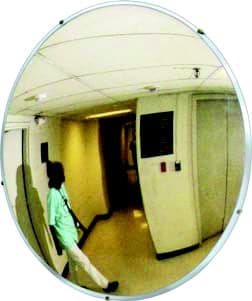
The corridor system in a hospital is built for straight-line movement and then used for everything else. A gurney pushed at walking speed takes up most of the width. A meal cart or a linen cart is taller than the person pushing it, so the person cannot see over it. Staff come out of patient rooms sideways, looking back into the room. Every corridor intersection combines all three, and the result is the kind of near-miss that everyone in the building has seen and nobody has time to report.
The manufacturer's hospital and office sheet is short because the solution is simple: put a mirror at ceiling height at every intersection so people can see what is coming before they get there. The mirrors are acrylic rather than glass, which matters in a building full of people who cannot get out of the way of falling glass. They are lighter, they do not shatter, and the manufacturer rates them about 20 percent brighter than a glass mirror of the same size, which helps in a dim corridor at night.
This page covers corridor intersections, elevator lobbies, doorways, and the busier multi-corridor areas around nurses' stations and supply rooms. The same layout applies to outpatient clinics, surgery centers, nursing homes, and assisted living, all of which run carts and wheelchairs down corridors with blind corners.
Where the blind spots are
Where hospital corridor blind spots are, and what to mount there
The spots below come straight from the manufacturer's high-traffic sheet. Each one has a mirror type that fits its geometry.
Spot 1
T-intersections and four-way corridor crossings
- The problem
- Two corridors meet at a right angle and neither party can see the other until they are in the intersection. This is the single most common location for a cart-to-person collision in a hospital.
- The mirror
- A 180-degree half dome mounted at ceiling level on the far wall of the T, or a full dome mirror at the center of a four-way crossing. The manufacturer notes that the majority of these domes go in at ceiling level at four-way and T-intersections, in fast-paced areas where people are moving equipment on carts. The 18-inch half dome handles a standard eight-foot corridor; use 26 inches for a wide corridor or a high ceiling.
Spot 2
Elevator lobbies and end walls
- The problem
- People step out of an elevator into a lobby they could not see from inside the car, straight into cross traffic. End walls at the end of a corridor hide whoever is coming around from the side.
- The mirror
- An Office-Eye mirror mounted at eye level on the wall facing the elevator doors, or on the end wall. It is an oblong 17-inch-wide acrylic mirror that shows the lobby to someone stepping out of the car, and the corridor to someone coming around the end wall. It mounts with screws, double-sided adhesive, or hook-and-loop, so it goes on a partition or a door without drilling.
Spot 3
Open doorways into corridors
- The problem
- Staff leave a patient room, supply room, or med room and step into the corridor without seeing who is passing. A door that opens outward makes it worse.
- The mirror
- An Office-Eye on the corridor wall opposite the door, angled so the person in the doorway sees the corridor in both directions before they step out. The manufacturer's sheet describes this exact use: it allows a view of the hallway through an open doorway.
Spot 4
Nurses' stations and multi-corridor hubs
- The problem
- Three or four corridors meet around a station under a grid ceiling, with constant cart and wheelchair traffic in every direction. No wall position sees all of it.
- The mirror
- A 360-degree full dome mirror in the ceiling at the center of the hub. The manufacturer recommends full domes for heavy traffic areas and grid ceilings; the stocked dome mounts to the deck above, and a one-piece drop-in version that sits in a standard 2 × 2 grid opening is coming soon. A 26-inch or 36-inch dome is typical here.
Spot 5
Loading docks, ambulance bays, and service corridors
- The problem
- Behind the scenes, the same cart traffic runs through service corridors with concrete walls, and delivery trucks back into docks that staff cross on foot.
- The mirror
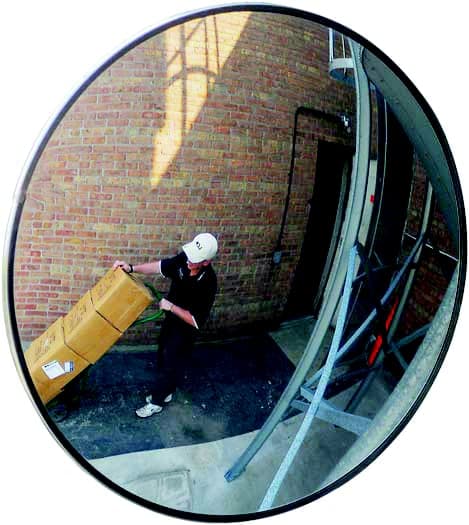
- A standard indoor convex mirror at each service corridor corner and an outdoor-rated convex mirror at the dock so drivers see people on the apron. Convex mirrors mount high on the wall with a Z-bracket and are the lowest-cost option for a single-direction corner.
Recommended mirrors
Mirrors we recommend for hospitals and clinics
These match the mirror types on the manufacturer's hospital sheet. All are acrylic, ship with hardware, and are made to order in the USA.
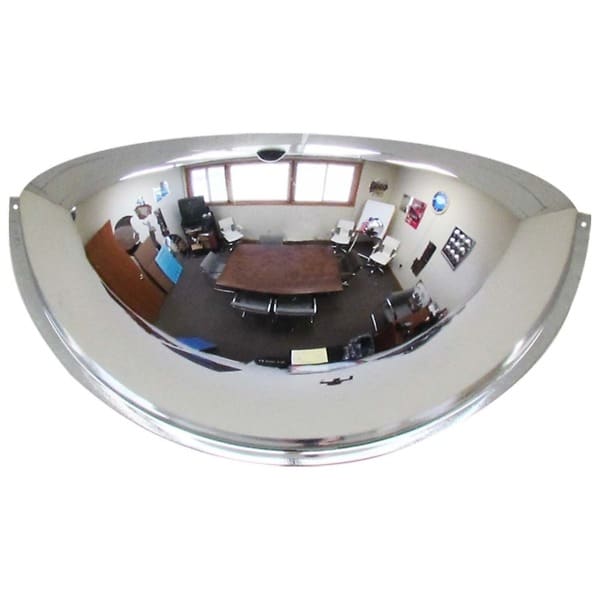
Dome Mirrors , Full Dome, Half Dome, & Quarter Dome Mirrors
Security Mirror: 180° Half Dome Acrylic Safety Mirror
- 18 inch
- 26 inch
- 32 inch
Why for hospitals & healthcare: The corridor intersection mirror. Mounts flat to the ceiling or wall at a T and shows both directions of the cross corridor.
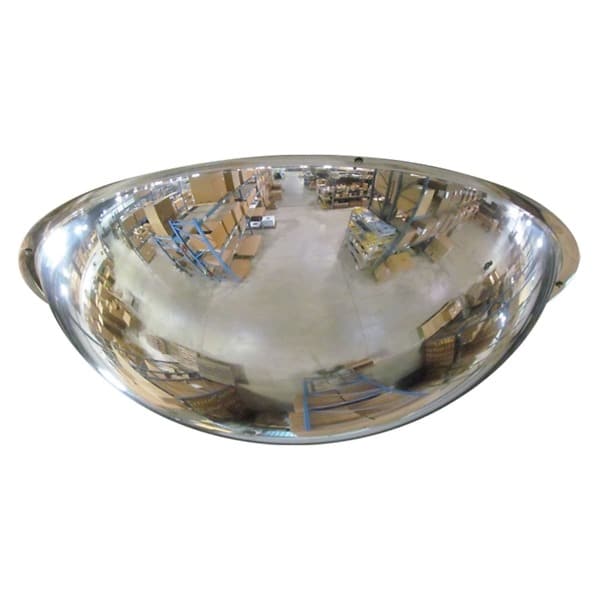
Dome Mirrors , Full Dome, Half Dome, & Quarter Dome Mirrors
360° Full Dome Acrylic Safety Mirror
- 8 inch
- 18 inch
- 26 inch
Why for hospitals & healthcare: For four-way crossings and the area around a nurses' station. One dome in the ceiling covers every approach.
Dome Mirrors , Full Dome, Half Dome, & Quarter Dome Mirrors
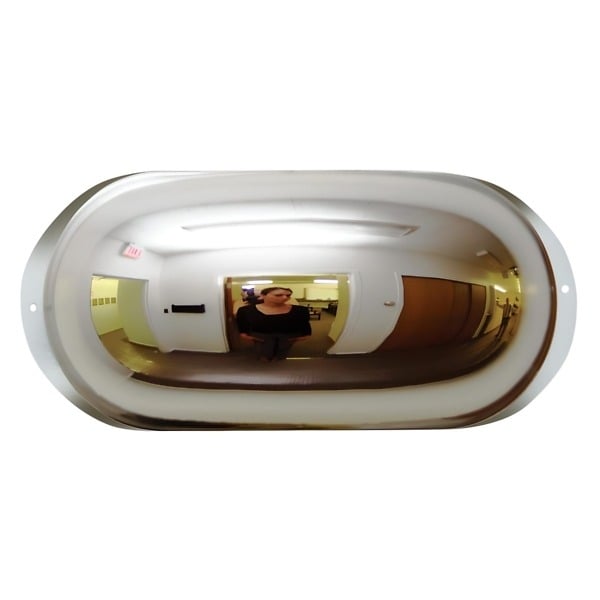
Se-Kure Office Eye-Oval Safety Mirror | 17" Convex Acrylic | Hallway & Elevator Security
- Ready to order
- 1 product images
- Built for safety visibility
Why for hospitals & healthcare: The elevator and doorway mirror. Eye-level, 17 inches wide, mounts with screws, adhesive, or hook-and-loop. Made for exactly this use.
Dome Mirrors , Full Dome, Half Dome, & Quarter Dome Mirrors
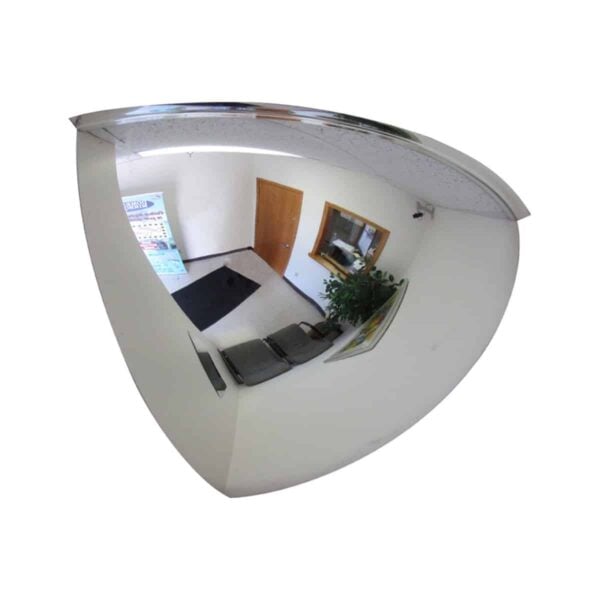
90° Quarter Dome Acrylic Safety Mirrors
- 18 inch
- 26 inch
- 32 inch
Why for hospitals & healthcare: For a corridor corner where the mirror must sit tight in the ceiling-wall junction. A 90-degree quarter dome shows the one cross corridor without projecting into the hallway.
Indoor · Acrylic · Hardboard
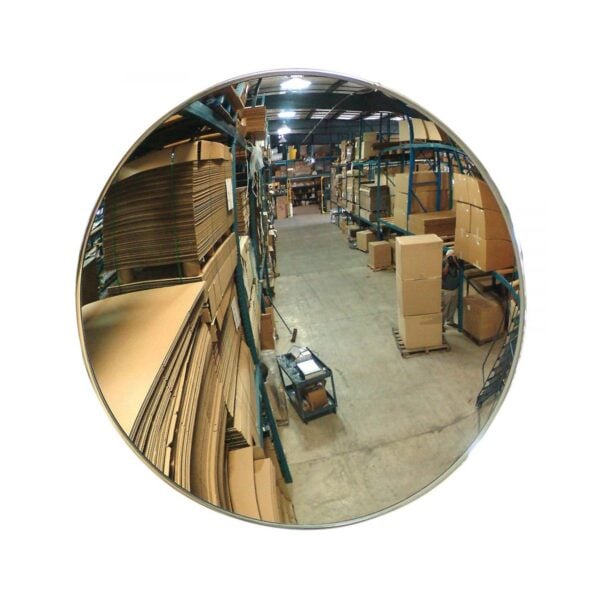
Indoor Acrylic Convex Mirror — Hardboard Back
- 160° view
- 12″–36″ sizes
- Z-bracket included
Why for hospitals & healthcare: For service corridors, supply rooms, and back-of-house corners where a single-direction view is all that is needed.
Dome Mirrors , Full Dome, Half Dome, & Quarter Dome Mirrors
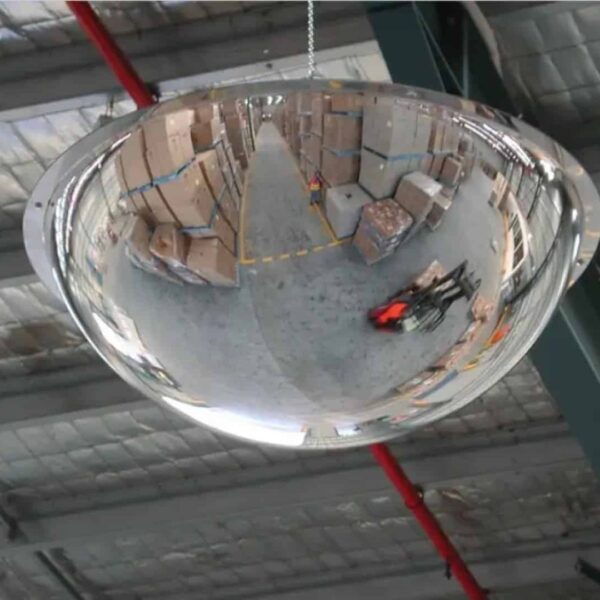
360° Polycarbonate Dome Mirror - Shatterproof
- No Backing
- Hardboard
- Full Dome
Why for hospitals & healthcare: For behavioral health units, emergency departments, and anywhere a mirror might be struck. Polycarbonate does not shatter.
Sizing
Sizing corridor mirrors
Corridor mirrors are sized to corridor width and ceiling height rather than to a long viewing distance (the dome sizing guide has the full table), because the person reading the mirror is usually within 10 to 20 feet of it.
| Location | Half dome | Full dome | Office-Eye / convex |
|---|---|---|---|
| Standard 8 ft corridor, 8–9 ft ceiling | 18″ | 18″ | Office-Eye 17″ |
| Wide corridor (10 ft+) or 10 ft ceiling | 26″ | 26″ | 18″ convex |
| Four-way crossing or station hub | — | 26″ to 36″ | — |
| Service corridor corner | 18″ | — | 18″ or 26″ convex |
Half domes and Office-Eye mirrors are the most common hospital order. If the corridor is longer than about 25 feet between the mirror and the person reading it, step up one size.
Mounting
Mounting in a hospital
Hospital walls and ceilings are usually drywall on metal stud, block, or a suspended grid. Every mirror here mounts with the hardware in the box.
- 1
Half domes at the ceiling line
Mount the flat back of the half dome against the wall with its top edge at the ceiling, centered on the corridor the mirror needs to show. Four screws into anchors or studs. At the ceiling line it sits above cart height and out of the traffic.
- 2
Full domes in a grid ceiling
The stocked full dome mounts to the deck above the grid with the provided hardware. A drop-in version that sits in a 2 × 2 opening in place of a tile is coming soon; when you use it, check with facilities that the grid can carry it before removing a tile.
- 3
Office-Eye at eye level
Mount it at about 60 to 66 inches to center. Use the screw holes on a wall, or the double-sided adhesive or hook-and-loop option on a partition, glass, or door. No tools needed for the adhesive method.
- 4
Check with infection control
Acrylic wipes down with standard hospital disinfectants. Avoid ammonia-based glass cleaner, which clouds acrylic over time. If your facility requires a cleanable-surface sign-off, the mirror is a smooth acrylic surface with a plastic or hardboard back.
Questions
Questions we get about hospitals & healthcare
What mirror goes at a hospital corridor intersection?
A 180-degree half dome mounted at the ceiling on the far wall of a T-intersection, or a 360-degree full dome at the center of a four-way crossing. The 18-inch half dome fits a standard eight-foot corridor. These are what the manufacturer specifies for fast-paced areas where staff move equipment on carts.
What is an Office-Eye mirror and where does it go?
An Office-Eye is an oblong acrylic mirror, 17 inches wide and about 8.5 inches tall, that mounts at eye level on a wall, door, or partition using screws, adhesive, or hook-and-loop. It goes beside elevator doors, on corridor end walls, and across from doorways so a person stepping out can see the hallway before they enter it.
Are these mirrors safe in a healthcare setting?
They are acrylic, not glass, so there is nothing to shatter. Acrylic is lighter than glass and the manufacturer rates it about 20 percent brighter, which helps in dim corridors. For behavioral health or emergency departments where a mirror could be struck, choose the polycarbonate dome mirror, which is rated at roughly 250 times the impact strength of glass.
How high should a corridor mirror be mounted?
Half and full domes mount at the ceiling line so they are above cart and equipment height and can be seen over a tall cart. Office-Eye mirrors mount at eye level, around 60 to 66 inches to center, because they are read by someone standing right next to them.
Can the mirrors be cleaned with hospital disinfectant?
Yes. Wipe with a soft cloth and a mild soap or a standard hospital disinfectant. Do not use ammonia-based glass cleaner or abrasive pads, which cloud and scratch acrylic.
Do you sell to hospitals and government facilities directly?
Yes. National Safety Mirror is a service-disabled veteran-owned small business registered in SAM.gov with a UEI and CAGE code, and we take purchase orders from hospitals, VA facilities, and public health systems. See the government contracting page for details.
Other facilities
Mirrors for other kinds of buildings
Offices
Office buildings have the same blind corners as any other building, plus a lot of people carrying coffee and looking at their phones.
See the mirrors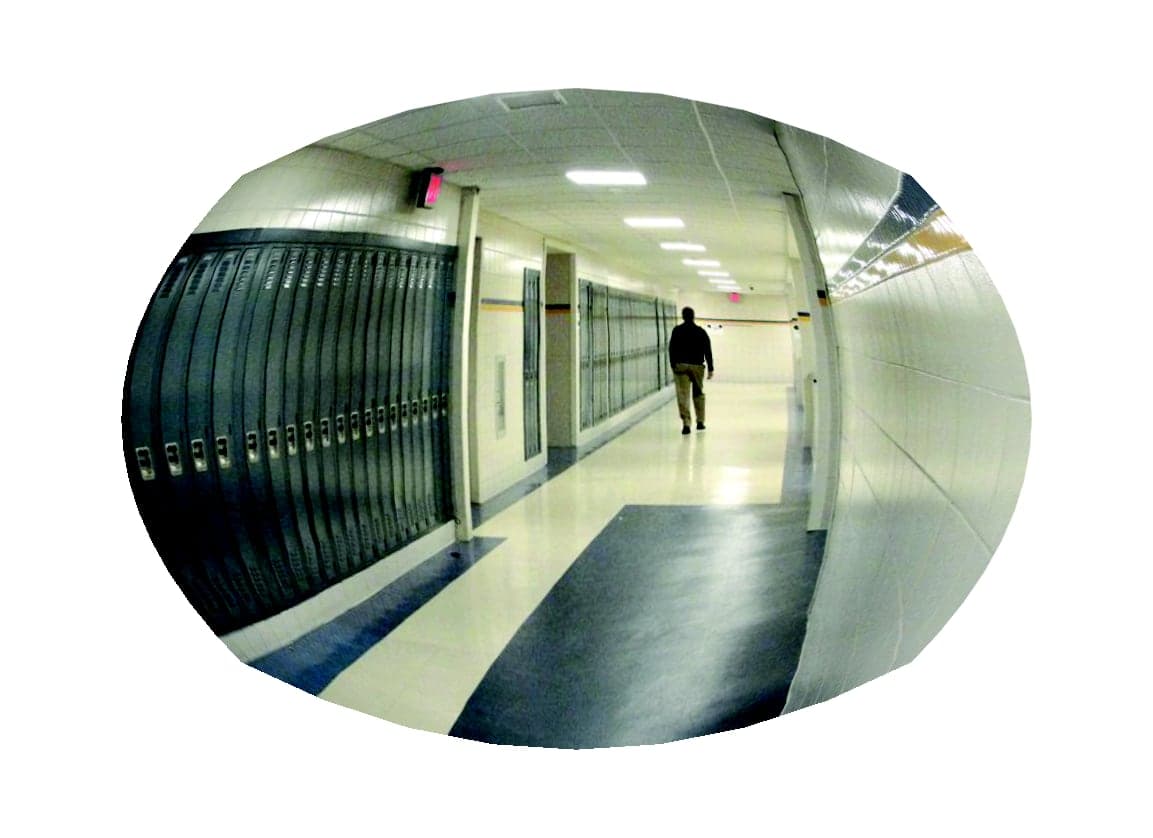
Schools
The manufacturer's school brochure names three places a mirror belongs: hallways, entrance and exit areas, and classrooms.
See the mirrors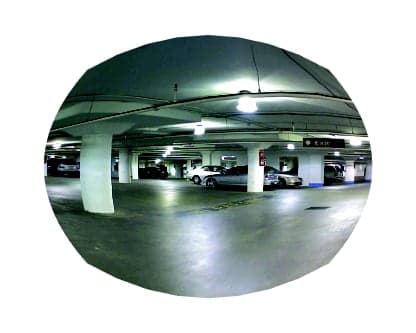
Parking Garages
A parking garage needs a convex mirror at every point where a driver has to commit to a turn without seeing what is around it: ramp turns, the exit onto the street, aisle corners at colum…
See the mirrorsRelated guides
Guides that go with this page
Dome mirror sizing guide
Quarter, half, and full dome dimensions and the corridor widths each one covers.
Dome mounting options
Ceiling, wall, and grid mounting for the domes on this page.
Government and institutional purchasing
UEI, CAGE, and purchase-order details for hospitals and public facilities.
Shop the categories
Every mirror on this page, by category
Dome mirrors
Half, full, quarter, and corner domes for corridor intersections.
Convex mirrors
Single-direction mirrors for service corridors and docks.
Traffic mirrors
Outdoor mirrors for ambulance bays, parking exits, and service drives.
Placement and sizing on this page follow the application sheets published by the manufacturer of our mirrors, Se-Kure Domes & Mirrors, and the specifications of the products in our catalog. Sizes and materials named here are the ones we stock; if your building needs something the sheet does not cover, call and we will work it out with you.
Free sizing help
Send us a photo of the corner and we will tell you what fits
A picture from where the person stands, plus a rough distance to the spot you cannot see, is usually enough for us to name the mirror, the size, and the bracket.