01Selection path
- Environment
- Interior
- Hazard
- Aisle visibility
- Start with
- Dome / convex
Security checkpoints
Inspect the underside of vehicles entering controlled areas where clear viewing and quick repeat checks matter.
Inspection And Security Visibility
1
inspection workflow first
2
main goals: visibility and maneuverability
100%
application-driven recommendations
By application
Inspect the underside of vehicles entering controlled areas where clear viewing and quick repeat checks matter.
Support underside inspection for service teams and fleet operators who need to see components without crawling underneath.
Useful for public-sector and campus environments that need controlled inspection workflows with durable portable tools.
Related guides
These links keep this category connected to the matching guide, adjacent mirror family, or installation help page instead of forcing a broad restart.
Use the NSM help hub for fleet, policy, and support pages tied to inspection-mirror orders.
Common questions on under-vehicle checks, handles, and checkpoint use.
Contact NSM for checkpoint, fleet, or security-buying guidance tied to inspection mirrors.
Safety and security mirror guides across common applications.
Mirrors by facility
Each page walks one kind of facility: the blind spots, the mirror for each one, the size to order, and how it mounts.
A convenience store needs two kinds of mirror: a dome mirror or DomeVex wide-view mirror mounted where the clerk can see the whole sales floor from the register, and smaller convex mirror…
The mirror that pays for itself fastest in a restaurant is the one over the kitchen door.
Office buildings have the same blind corners as any other building, plus a lot of people carrying coffee and looking at their phones.
Hospital corridors are where beds, meal carts, wheelchairs, and staff in a hurry meet at right angles with no line of sight.
2 products
showing all results
No products match these filters.
Try removing a filter or browse all products in this category.
Clear filtersFree sizing help
Send us a photo and an American-based specialist can usually recommend the exact model, size, and mount for your space — free, with no obligation.
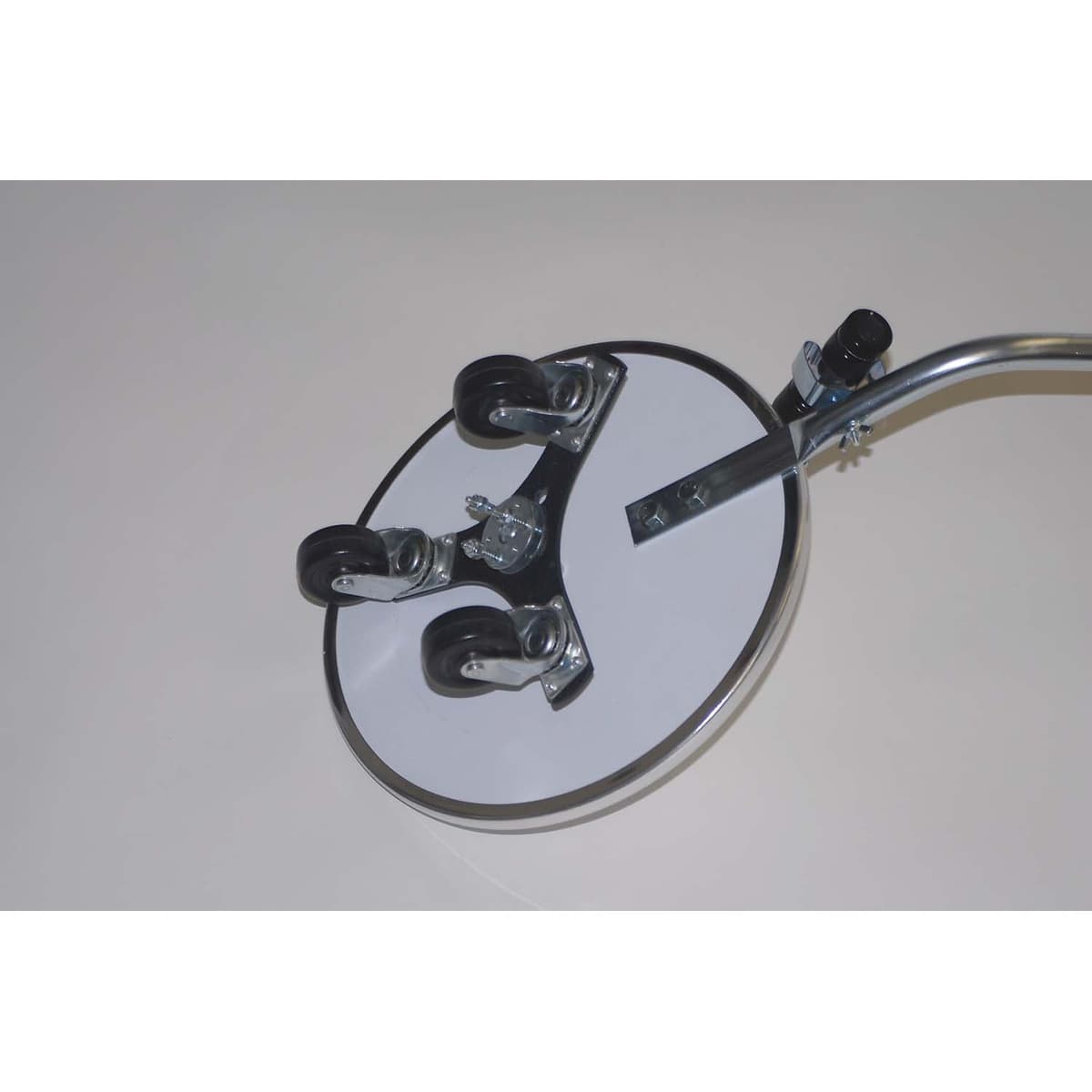
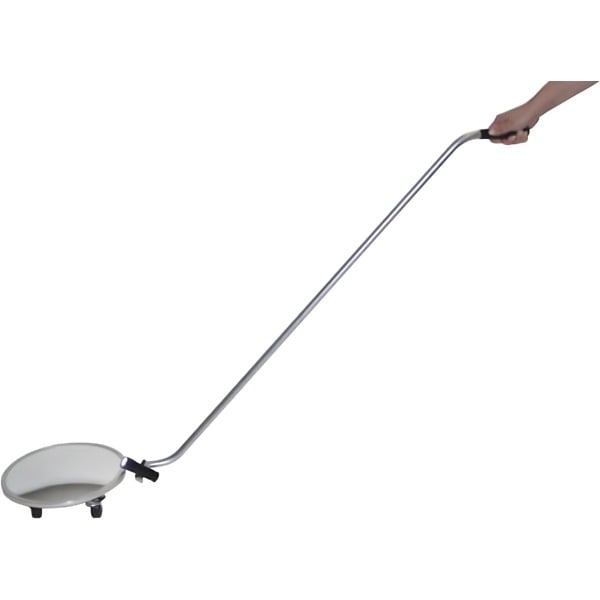
The 12 inch wheeled inspection mirror uses a protected perimeter around the acrylic mirror head, a galvanized steel handle with a plastic grip, and a mechanically bolted handle connection. Those details help the mirror tolerate repeated under-vehicle searches instead of feeling like a lightweight accessory.
On wheeled models, the heavy-duty swiveling wheel carriage lets the operator roll the mirror under the vehicle and tilt the mirror head for a better underside view without lifting the wheels off the floor. Lighted configurations add an extra-bright 9 LED flashlight with mounting clips for night, garage, and shaded checkpoint work.
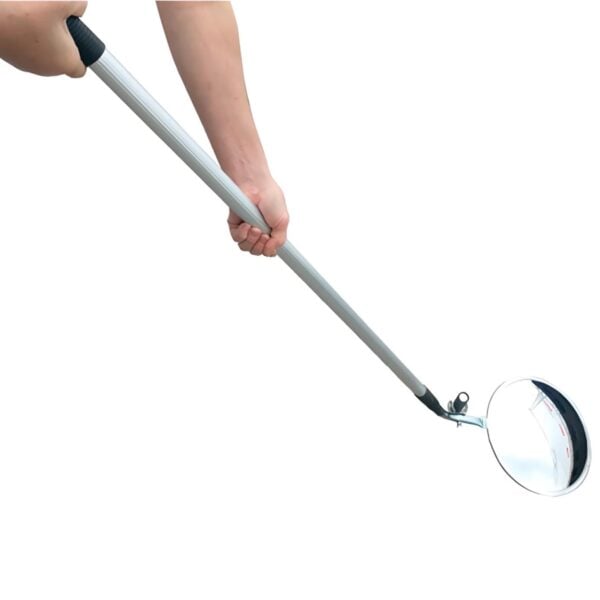
Use flat lens options when you want a more true-to-scale reflected view, convex lens options when you need a wider underside view, wheeled models for repeat checkpoint lanes, and no-wheel models when lighter handheld portability matters more.
Inspection workflow
Best when teams move between vehicles quickly
Best when inspection is part of maintenance or safety operations
Inspection mirror selection guide
Security checkpoints need professional vehicle inspection mirrors that let staff scan under cars, trucks, delivery vans, and service vehicles quickly without crawling under the vehicle. Rolling undercarriage mirrors are strongest for repeat inspections at controlled entrances, while handheld and telescoping inspection mirrors fit mobile patrols and lower-volume security checks.
Fleet maintenance and DOT inspection workflows use under-vehicle inspection mirrors to see leaks, hanging components, frame damage, exhaust issues, and hidden underside hazards before a technician moves under the vehicle. If the job is recurring fleet work rather than fixed facility surveillance, choose reach, handle comfort, and lens durability before comparing fixed convex safety mirrors.
Campus, municipal, and law-enforcement teams often need portable mirrors that can move between vehicle lanes, gates, and temporary inspection points. LED lighting options matter when inspections happen at night, in garages, or under high-clearance vehicles. For permanent driveway or parking-lot visibility, use traffic mirrors; for under-car search and checkpoint work, use inspection mirrors.
GSA-approved and Made in USA construction help inspection products fit public-sector purchasing requirements. Use this category for undercarriage mirrors, handheld inspection mirrors, telescoping inspection mirrors, rolling inspection mirrors, and checkpoint security mirrors trusted by law enforcement, DOT, fleet, campus, and industrial facilities.
Compact round convex inspection mirror for under-car searches, checkpoint security, and targeted vehicle underside visibility.
Use fixed outdoor convex traffic mirrors when the task is seeing around driveways, fences, building corners, and parking-lot exits.
Use wall-mounted convex mirrors for warehouse corners, retail aisles, facility intersections, and indoor blind-spot visibility.
Compare acrylic and polycarbonate mirror lenses when durability, clarity, impact risk, and replacement cost matter.
Inspection questions
Need application guidance?
Once NSM knows whether the mirror is for a checkpoint, fleet bay, or routine facility inspection, the right format is usually straightforward.