Shop dome mirrors
Move from the dome FAQ into the main category for retail, hallway, and aisle intersections.
Multi-direction visibility
Choose full, half, quarter, and three-quarter domes for retail, school, hallway, and warehouse intersections.
Category resources
Use the guide and category links below to keep this FAQ topic connected to the matching product and buying pages.
Move from the dome FAQ into the main category for retail, hallway, and aisle intersections.
Use the sizing guide before choosing quarter, half, or full dome dimensions.
Review chain, corner, wall, and ceiling installation options before ordering.
Featured on: Security Mirror: 180° Half Dome Acrylic Safety Mirror, 270° Corner Dome Mirror - Acrylic Safety Mirror, 360° Full Dome Mirror - Acrylic with Safety Border, 360° Full Dome Acrylic Safety Mirror, 360° Polycarbonate Dome Mirror - Shatterproof, 90° Quarter Dome Acrylic Safety Mirrors, Se-Kure Office Eye-Oval Safety Mirror | 17" Convex Acrylic | Hallway & Elevator Security
Featured on: Security Mirror: 180° Half Dome Acrylic Safety Mirror, 270° Corner Dome Mirror - Acrylic Safety Mirror, 360° Full Dome Mirror - Acrylic with Safety Border, 360° Full Dome Acrylic Safety Mirror, 360° Polycarbonate Dome Mirror - Shatterproof, 90° Quarter Dome Acrylic Safety Mirrors, Se-Kure Office Eye-Oval Safety Mirror | 17" Convex Acrylic | Hallway & Elevator Security
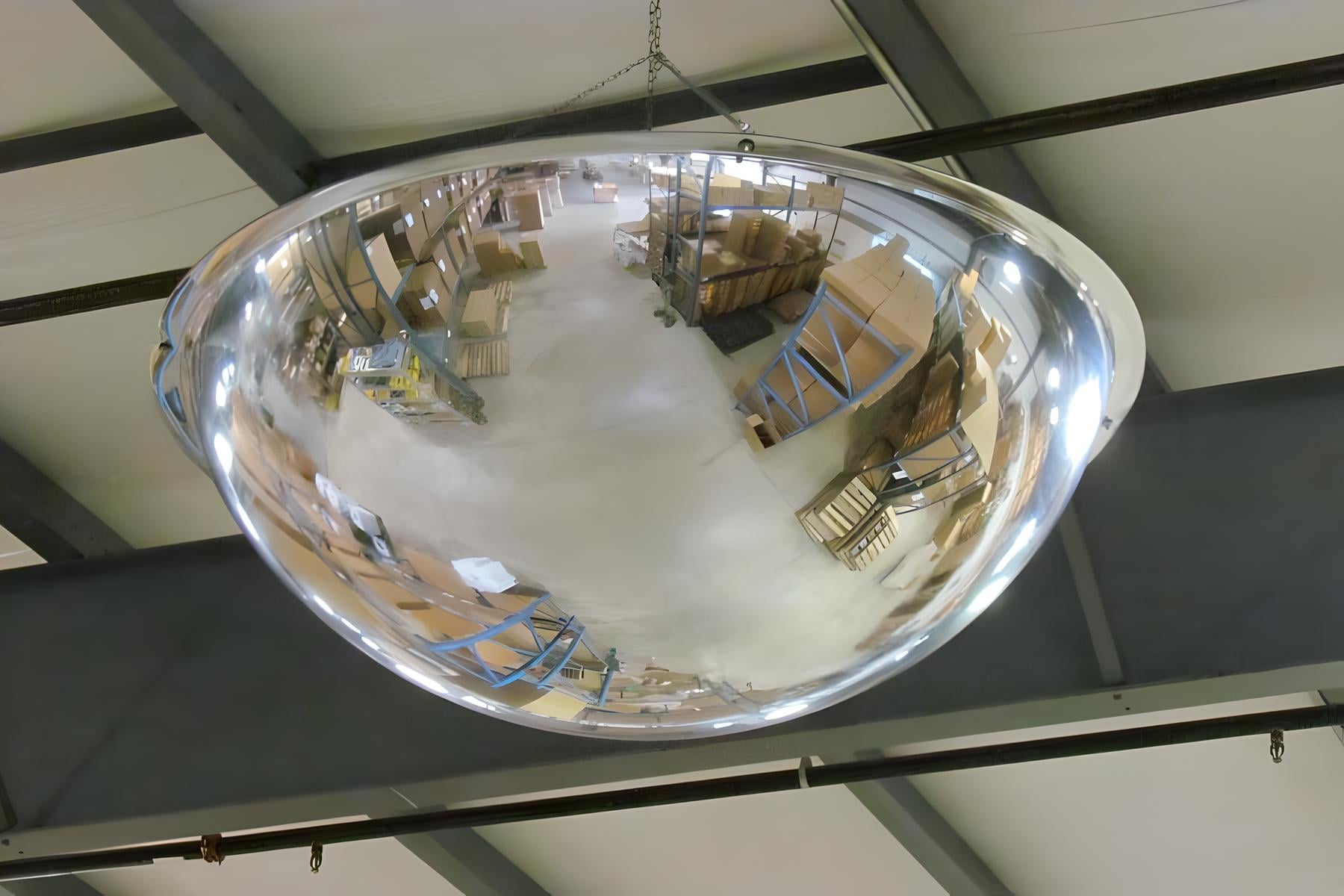
360 degree viewing
Placement: Ceiling center of a four-way intersection
Use a full dome when traffic can arrive from all four directions. The mirror sits overhead at the crossing point, giving every approach a view into the other approaches before entering the intersection.
Best for: Four-way hallways, open retail floors, warehouse aisle crossings, schools, hospitals, and lobbies.
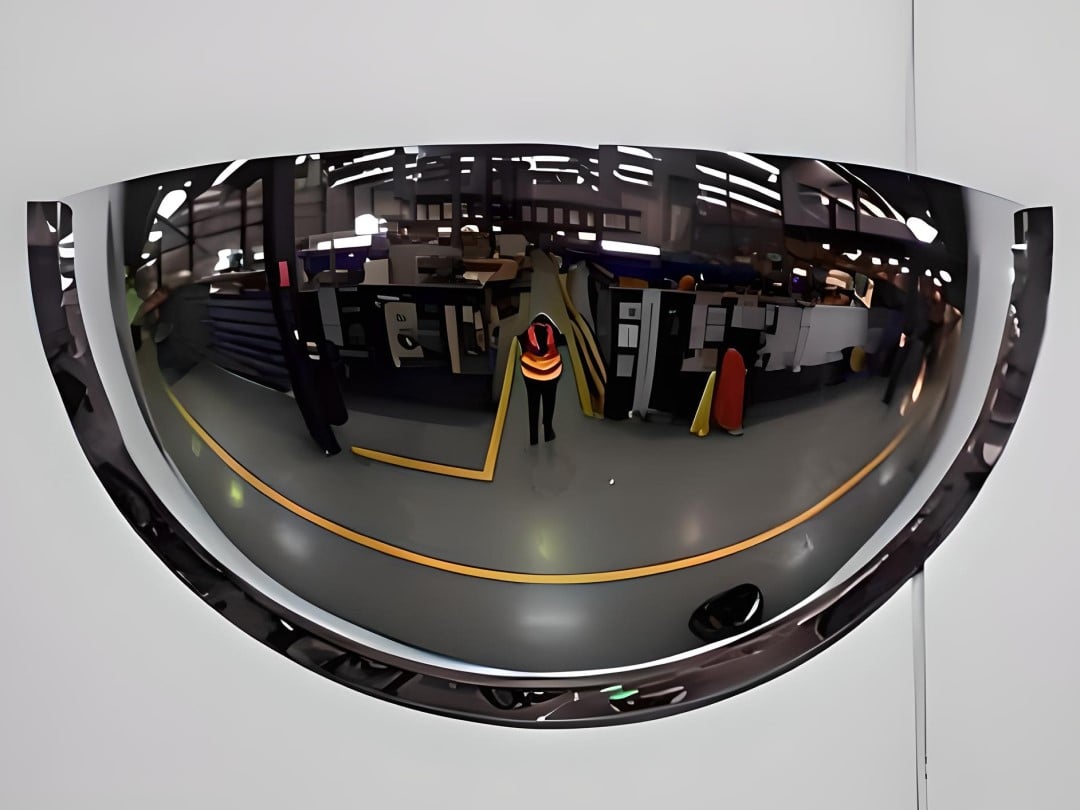
180 degree viewing
Placement: Wall or ceiling edge at a T-intersection
Use a half dome where one side is a wall and the open side needs visibility. The brochure diagram shows arrows fanning from the wall into the walkway, which matches aisle ends, doorways, and T-intersections.
Best for: Offices, hotels, hospitals, retail stores, stockroom doors, and hallway T-intersections.
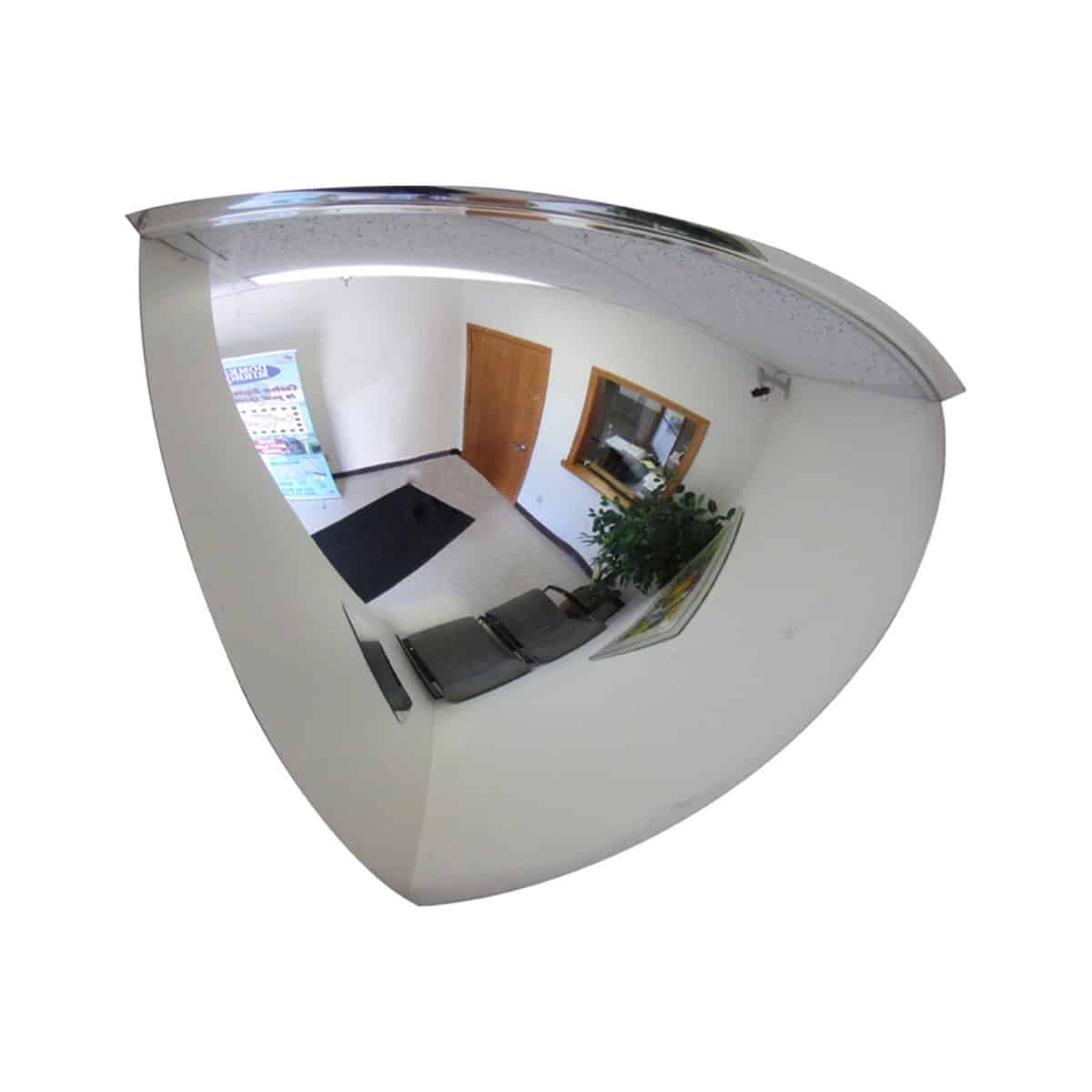
90 degree viewing
Placement: Inside corner where two walls meet
Use a quarter dome when the hazard is limited to a tight corner. The mirror tucks into the ceiling-wall corner and shows the two perpendicular approach paths without projecting into the room.
Best for: Elevator corners, classroom corners, two-way intersections, and compact corridor turns.
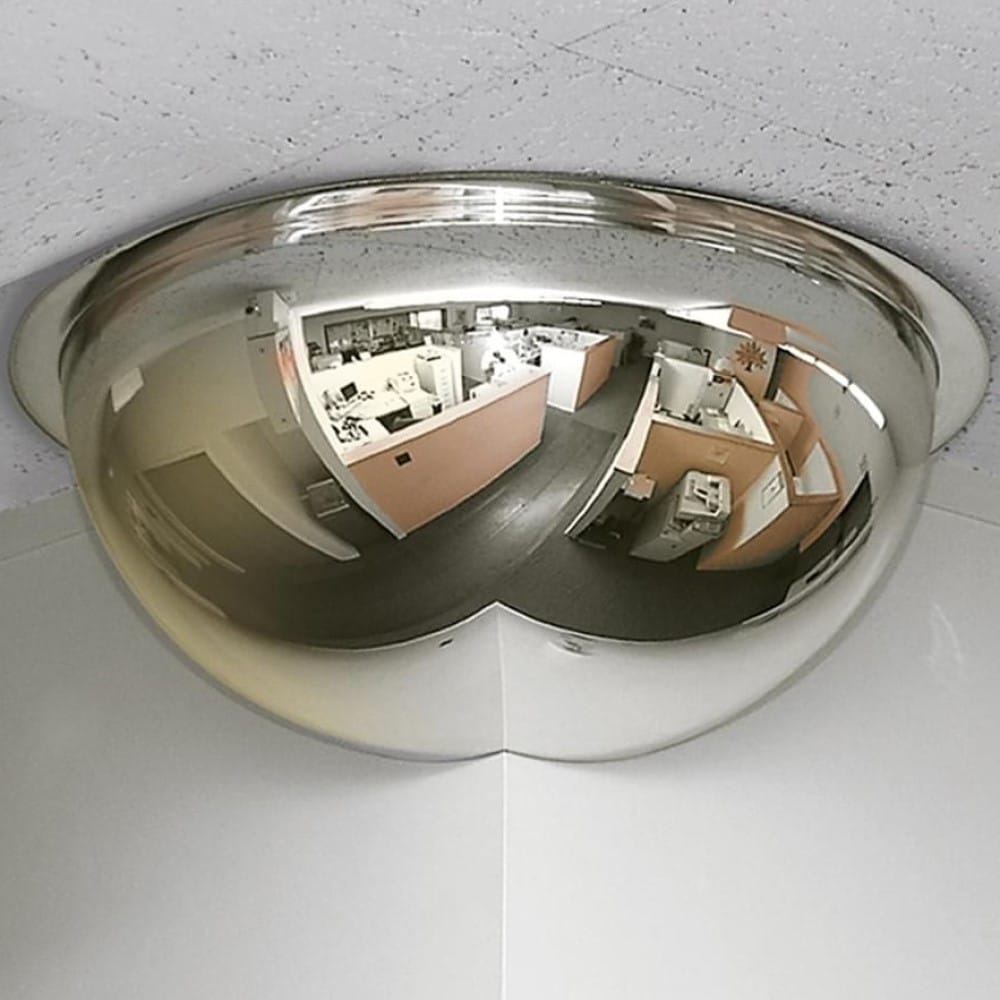
270 degree viewing
Placement: Outside corner, column, or projecting wall edge
Use a 270 degree corner dome where traffic wraps around an outside corner. It covers three approach directions while the wall or column blocks the fourth quadrant.
Best for: Hallway outside corners, column wraps, wraparound corridors, and corner transitions.
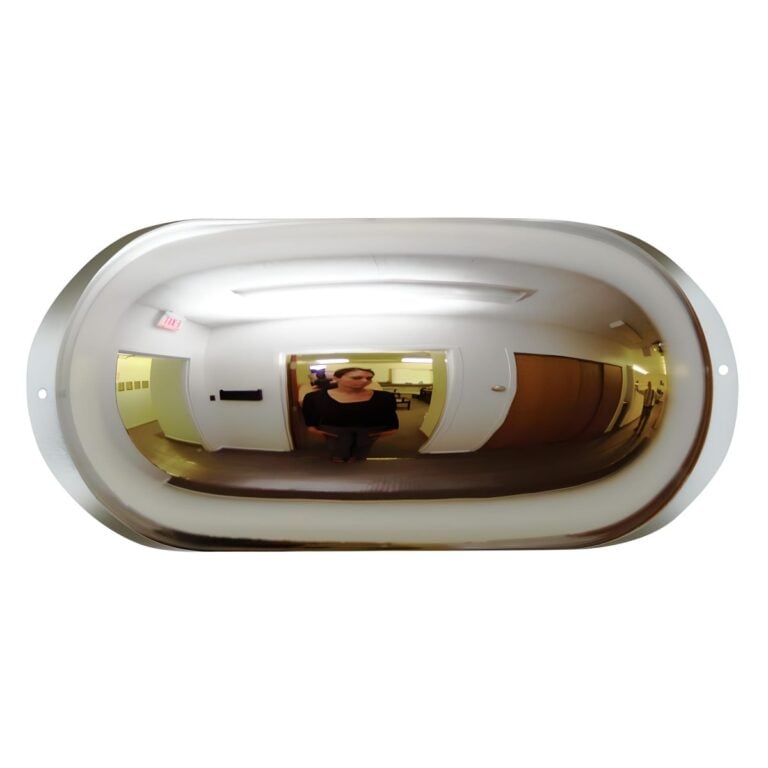
Eye-level hallway view
Placement: Wall, door, or partition at eye level
Use the Office-Eye where a person standing at a doorway, elevator, stairwell, or partition needs to see hallway activity before stepping out. It is read at pedestrian eye level rather than from the ceiling.
Best for: Offices, conference rooms, elevators, stairwells, hospitals, schools, restaurants, and reception areas.
Sources: Se-Kure dome mirror brochure
360 degree viewing
Placement: Ceiling center of a four-way intersection
Use a full dome when traffic can arrive from all four directions. The mirror sits overhead at the crossing point, giving every approach a view into the other approaches before entering the intersection.
Best for: Four-way hallways, open retail floors, warehouse aisle crossings, schools, hospitals, and lobbies.
Sources: Se-Kure dome mirror brochure
180 degree viewing
Placement: Wall or ceiling edge at a T-intersection
Use a half dome where one side is a wall and the open side needs visibility. The brochure diagram shows arrows fanning from the wall into the walkway, which matches aisle ends, doorways, and T-intersections.
Best for: Offices, hotels, hospitals, retail stores, stockroom doors, and hallway T-intersections.
Sources: Se-Kure dome mirror brochure
90 degree viewing
Placement: Inside corner where two walls meet
Use a quarter dome when the hazard is limited to a tight corner. The mirror tucks into the ceiling-wall corner and shows the two perpendicular approach paths without projecting into the room.
Best for: Elevator corners, classroom corners, two-way intersections, and compact corridor turns.
Sources: Se-Kure dome mirror brochure
270 degree viewing
Placement: Outside corner, column, or projecting wall edge
Use a 270 degree corner dome where traffic wraps around an outside corner. It covers three approach directions while the wall or column blocks the fourth quadrant.
Best for: Hallway outside corners, column wraps, wraparound corridors, and corner transitions.
Sources: Se-Kure dome mirror brochure
Eye-level hallway view
Placement: Wall, door, or partition at eye level
Use the Office-Eye where a person standing at a doorway, elevator, stairwell, or partition needs to see hallway activity before stepping out. It is read at pedestrian eye level rather than from the ceiling.
Best for: Offices, conference rooms, elevators, stairwells, hospitals, schools, restaurants, and reception areas.
Sources: Se-Kure dome mirror brochure