Convex mounting guide
How to choose between Z-brackets and telescoping brackets for your wall, post, or pole.
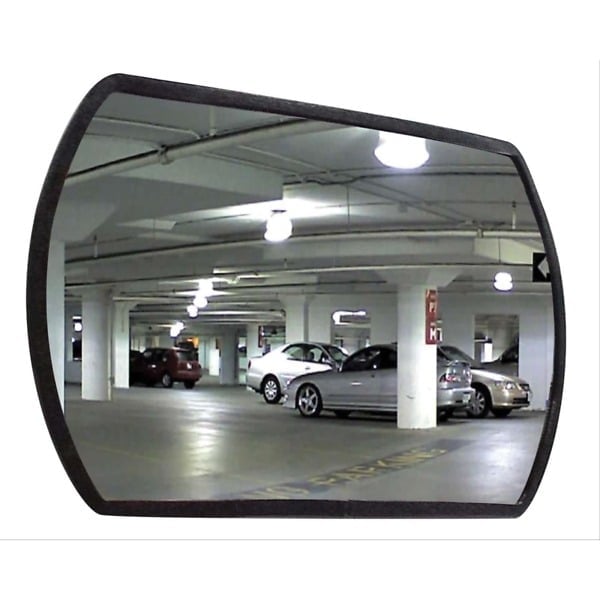
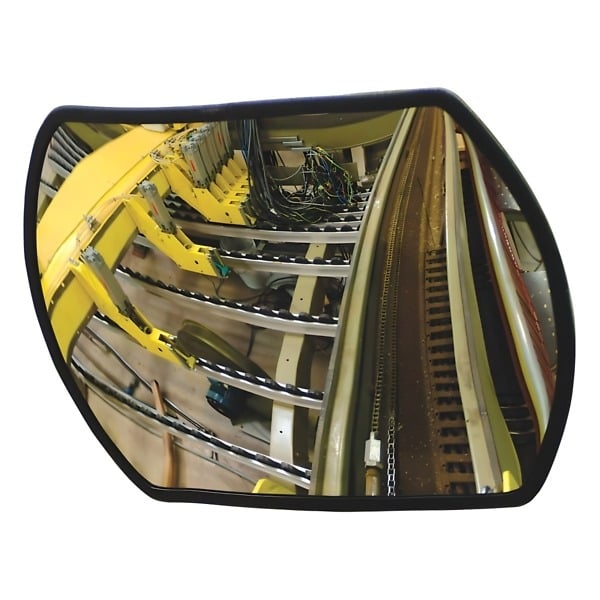
Rectangular Convex Mirrors
160°
Convex visibility
Wall
Mount-friendly format
Indoor
Common environment
Improve visibility around hallway corners, pedestrian routes, and tight circulation areas without adding unnecessary vertical footprint.
Use a flatter profile where vehicles need better visibility at turns, exits, ramps, or low-clearance structure edges.
Help teams see around rack ends, doorways, and lane edges where a round mirror may not fit the available wall space as cleanly.
Related guides
These links keep this category connected to the matching guide, adjacent mirror family, or installation help page instead of forcing a broad restart.
How to choose between Z-brackets and telescoping brackets for your wall, post, or pole.
Compare acrylic and polycarbonate before finalizing indoor vs outdoor convex builds.
Weather-rated mirrors for driveways, road approaches, and parking lot exits.
Buying guides and real-world installs from the convex mirror blog.
Mirrors by facility
Each page walks one kind of facility: the blind spots, the mirror for each one, the size to order, and how it mounts.
A parking garage needs a convex mirror at every point where a driver has to commit to a turn without seeing what is around it: ramp turns, the exit onto the street, aisle corners at colum…
A convenience store needs two kinds of mirror: a dome mirror or DomeVex wide-view mirror mounted where the clerk can see the whole sales floor from the register, and smaller convex mirror…
2 products
showing all results
No products match these filters.
Try removing a filter or browse all products in this category.
Clear filtersFree sizing help
Send us a photo and an American-based specialist can usually recommend the exact model, size, and mount for your space — free, with no obligation.
Shape selection
Best for maximum general blind-spot visibility
Best when installation footprint drives the decision
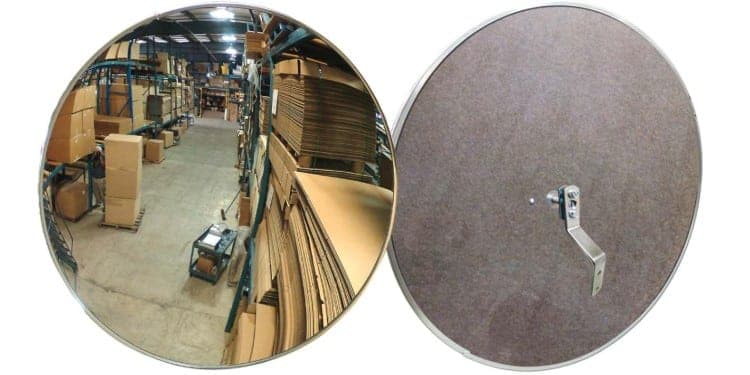
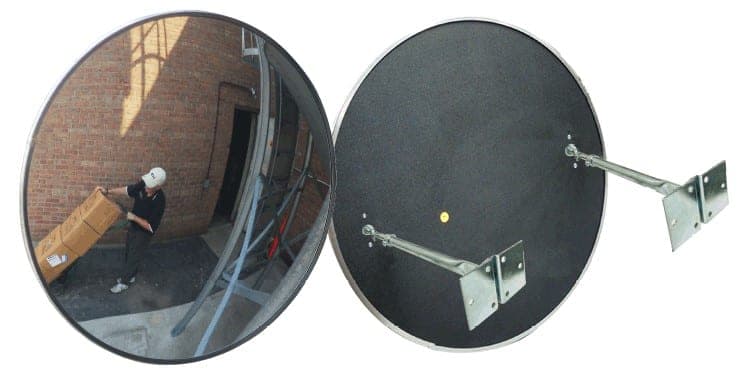
Lightweight and cost-effective for indoor installations. Hardboard is the standard backing for warehouses, hallways, retail stores, and other dry, climate-controlled spaces.
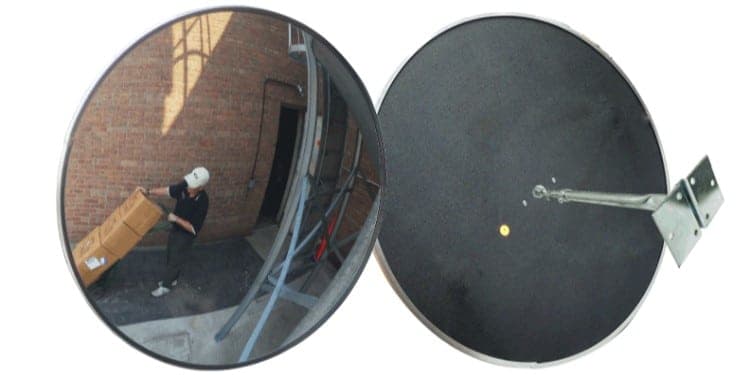
High-density polyethylene resists moisture, UV exposure, and temperature swings. HDPE is the right choice for outdoor mirrors, loading docks, driveways, and any unheated or damp environment.
The heaviest and most durable backing option. Galvanized steel is corrosion-resistant and built for high-traffic industrial environments — factories, parking garages, and loading zones where impact risk is highest.