Solutions by facility
Swimming Pool Safety Mirrors for Lifeguards, Slides, and Blind Corners
A pool safety mirror is an acrylic convex mirror on a plastic back mounted where a lifeguard or a parent cannot see: behind a water slide, under the guard chair, around a column or a wall at an indoor pool, and at the corner of a backyard pool hidden by the house. The manufacturer's pool sheet specifies acrylic lens, plastic backing, and included mounting hardware, in 12-, 26-, 30-, and 36-inch sizes, with each inch of diameter covering about one foot of viewing distance. They are rated for both indoor and outdoor pool areas.
12″–36″
four sizes on the manufacturer's pool sheet
1 ft per inch
of diameter in viewing distance
Indoor + outdoor
rated for both pool environments
Plastic back
no hardboard to swell in humidity
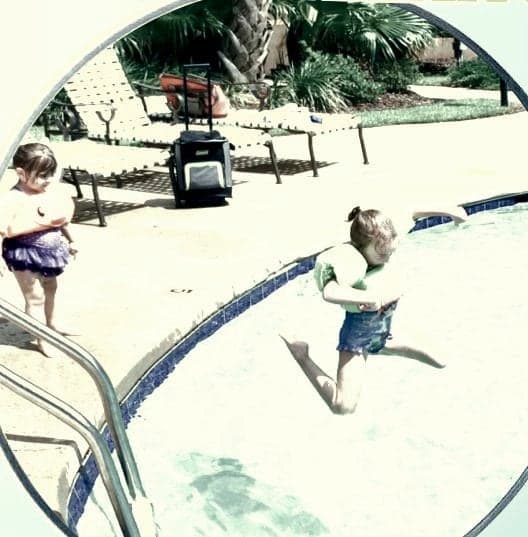
A lifeguard chair gives a view of the water in front of it and not much else. The slide tower blocks the landing pool. The column at an indoor pool hides the shallow-end corner. The pump house and the fence corner at a backyard pool hide the steps. The manufacturer's swimming pool sheet puts it directly: these mirrors make obscured areas visible, protecting children and adults from dangers that might occur, and every commercial and backyard pool area should have them.
The right mirror for a pool is a plain acrylic convex on a plastic back. Not because it is the cheapest, although it is close, but because it is the one that survives the environment. A hardboard back swells and delaminates in pool humidity. Glass is out of the question around bare feet. Acrylic is lightweight, does not shatter, and stands up to chlorine and sun. The manufacturer rates its pool mirrors for both indoor and outdoor use and includes the mounting hardware.
This page covers commercial pools, water parks, hotel and apartment pools, school and YMCA natatoriums, and backyard pools. The mirror is the same in every case; only the size and the mounting change.
Where the blind spots are
Where pool blind spots are, and what to mount there
Sit in the guard chair, or stand where the parent stands, and note what you cannot see. Each spot gets a mirror sized to the distance back to that position.
Spot 1
Behind the slide or play structure
- The problem
- A slide tower, a play structure, or a splash feature blocks the guard's view of its own landing zone and the deck behind it. At a water park this is the most common blind spot on the deck.
- The mirror
- A 30- or 36-inch outdoor acrylic convex mirror on a post or the wall behind the feature, angled back toward the guard chair, so the guard sees the landing pool and the deck without leaving the chair. Size to the distance from the chair; a 36-inch mirror is comfortable at 36 feet.
Spot 2
Under and behind the guard chair
- The problem
- The area directly under and behind an elevated chair is the guard's own blind spot: the ladder, the deck behind, and the wall of the pool nearest the chair.
- The mirror
- A 26-inch convex mounted on the fence or wall behind the chair, aimed at the base of the chair and the near wall of the pool. It fills in the spot the guard cannot turn around to watch.
Spot 3
Indoor pool columns and alcoves
- The problem
- Natatoriums have structural columns, a bulkhead, and alcoves for the therapy pool or spa. Each one hides a piece of the deck or water from the guard.
- The mirror
- A 26- or 30-inch convex high on the wall opposite the column or at the alcove opening. The plastic back is the right choice indoors as well because natatorium humidity is as hard on hardboard as rain is. For a two-direction view at a bulkhead, an outdoor DomeVex sees 180 degrees from one mirror.
Spot 4
Locker room and deck entrances
- The problem
- Swimmers come out of the locker room onto a wet deck at a right angle to people walking the deck. At a school or club pool this is where the running-on-deck collisions happen.
- The mirror
- An 18-inch convex mirror above the locker room door, angled at the deck, so a swimmer coming out sees deck traffic. A half dome mirror at the ceiling works if the door opens into a T.
Spot 5
Backyard pools
- The problem
- The house, the pump house, a fence corner, or a hedge hides the steps or the shallow end from the patio or the kitchen window where the adult is standing.
- The mirror
- A 12- or 26-inch acrylic convex on the fence or the house wall, aimed at the hidden corner so it can be seen from the patio door. The manufacturer's sheet is explicit that backyard pool areas should have convex mirrors, not only commercial ones. A 12-inch mirror covers about 12 feet, which is enough for most backyard corners.
Recommended mirrors
Mirrors we recommend for pools
The manufacturer's pool mirror is an acrylic convex on a plastic back with hardware included. These are the catalog items that match it, plus the polycarbonate and DomeVex options for harder cases.
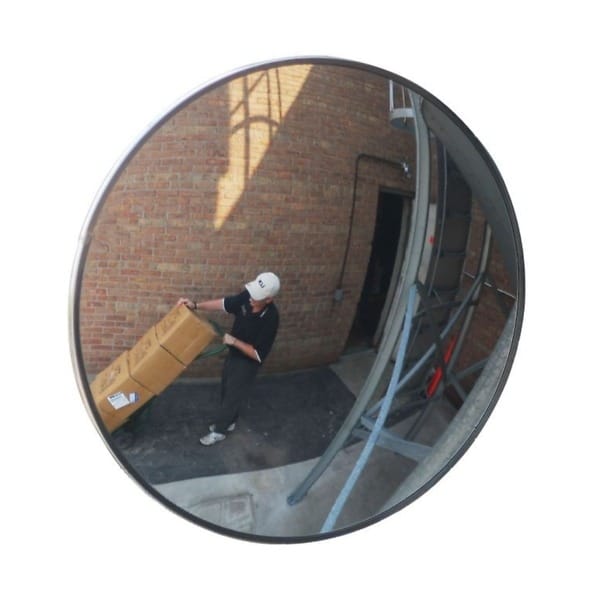
Outdoor · Acrylic · Heavy-duty plastic
Outdoor Acrylic Convex Mirror — Heavy Duty Plastic Back
- Weather-resistant
- 12″–36″
- Telescoping bracket
Why for swimming pools: The pool mirror. Acrylic lens, heavy-duty plastic back, telescoping bracket, 12 to 36 inches. Rated for indoor and outdoor pool areas. This is the product on the manufacturer's pool sheet.
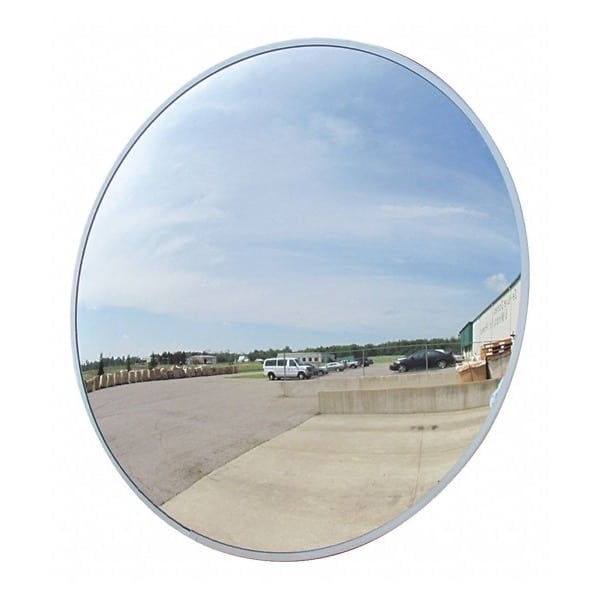
Outdoor · Polycarbonate · HDPE
Polycarbonate Convex Mirror — HDPE Backing (Outdoor)
- Most durable
- 12″–30″
- Salt + UV ready
Why for swimming pools: For water parks and public pools where the mirror will be hit by a ball or a thrown object. Polycarbonate does not crack, and the plastic back handles the wet.
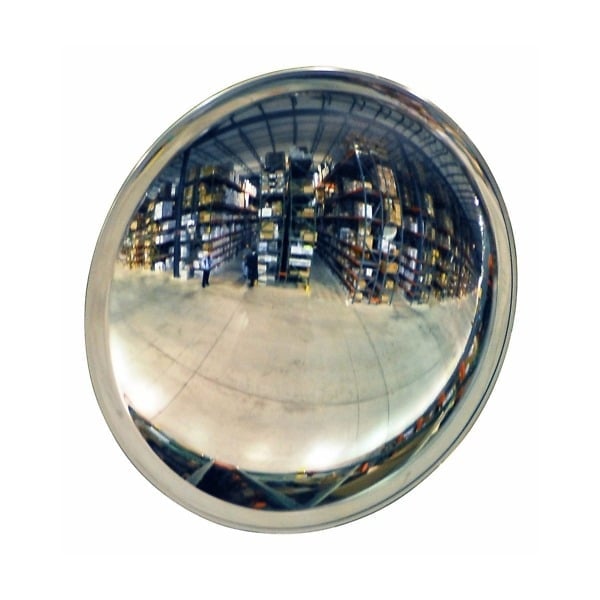
Outdoor · Wide-angle · Acrylic
DomeVex Outdoor Wide Angle Mirror
- Weather-resistant
- Broad sightlines
- Drive aisle ready
Why for swimming pools: For a bulkhead, a corner of an L-shaped pool, or anywhere one mirror must show two directions. A full 180 degrees from one mirror.
Outdoor · Acrylic · Galvanized steel
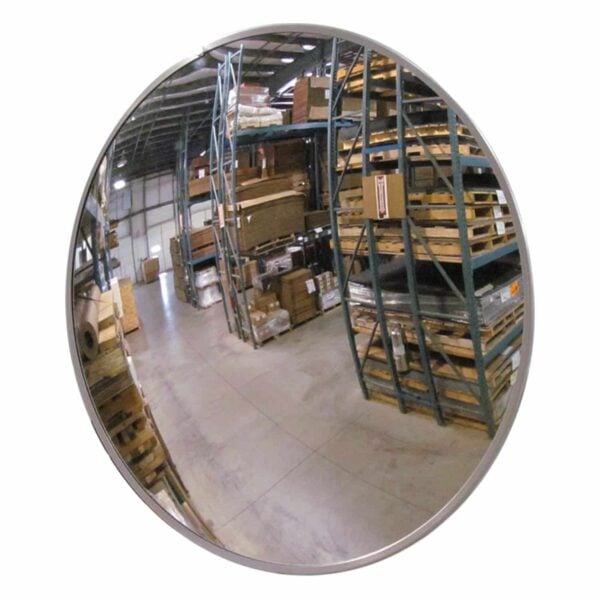
Acrylic Convex Security Mirror with Galvanized Steel Backing
- Heavy-duty steel back
- 18″–36″
- High-wind ready
Why for swimming pools: For a windy outdoor deck or a rooftop pool where the mirror needs a stiffer back and a stronger mount.
Outdoor · Acrylic · Safety border
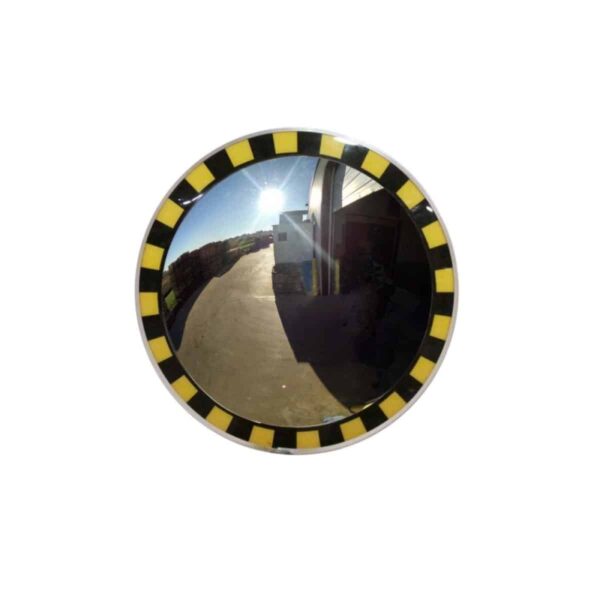
Outdoor Security Border Warning Convex Mirror
- High-visibility rim
- HDPE backing
- Outdoor duty
Why for swimming pools: For the spot where the mirror also marks a hazard, like the deep-end drop-off or the slide landing. The safety-border striped rim draws the eye.
Dome Mirrors , Full Dome, Half Dome, & Quarter Dome Mirrors
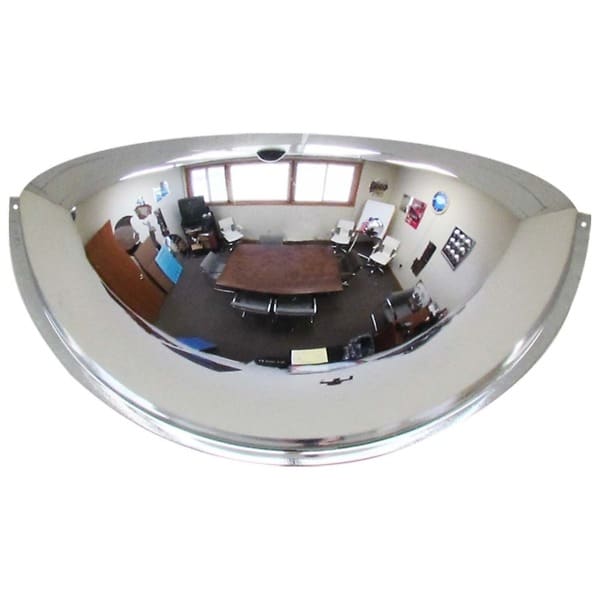
Security Mirror: 180° Half Dome Acrylic Safety Mirror
- 18 inch
- 26 inch
- 32 inch
Why for swimming pools: For a locker room door that opens into a T on the deck, or a corridor between the pool and the gym.
Sizing
Sizing pool mirrors
The manufacturer's pool sheet gives the rule directly: a 12-inch mirror has a 12-foot viewing area, a 26-inch mirror 26 feet, a 30-inch mirror 30 feet, and a 36-inch mirror 36 feet. Measure from where the mirror will hang to the guard chair or the patio, and pick the size that covers it.
| Distance to the guard or viewer | Mirror size | Typical location |
|---|---|---|
| Up to 12 ft | 12″ | Backyard fence corner, steps |
| 12 to 26 ft | 26″ | Behind the guard chair, locker room door, indoor column |
| 26 to 30 ft | 30″ | Slide landing, therapy pool alcove |
| 30 to 36 ft | 36″ | Water park deck, large slide tower |
Sun glare and water reflection make a pool mirror harder to read than an indoor one. If the distance is near the top of a range, go up a size.
Mounting
Mounting at a pool
Pool mirrors go on fences, posts, block walls, and natatorium walls. The telescoping bracket in the box handles all of them; the anchor is the only thing that changes.
- 1
Use stainless or coated fasteners
Chlorine and humidity corrode plain steel screws in a season. Use stainless steel anchors and screws, or at minimum galvanized. The bracket itself is powder-coated.
- 2
Mount above splash height
Seven feet or more to the bottom edge keeps the mirror clear of splash and out of reach from the deck. On a fence, mount to a post, not the mesh.
- 3
Aim it from the chair
Have someone sit in the guard chair, or stand at the patio door, while another person adjusts the mirror until the hidden corner or the slide landing shows in it. The telescoping bracket lets the mirror stand off the wall to clear a column.
- 4
Rinse it
Hose the mirror off when you hose the deck. Chlorine residue dries to a haze on any surface. A soft cloth and mild soap restore it; do not use ammonia glass cleaner or a scouring pad on acrylic.
Questions
Questions we get about swimming pools
What kind of mirror is used at a swimming pool?
An acrylic convex mirror on a plastic back. The manufacturer's pool sheet specifies an acrylic lens, plastic backing, and included mounting hardware, in 12-, 26-, 30-, and 36-inch sizes, rated for both indoor and outdoor pool areas. Acrylic does not shatter, is lightweight, and stands up to chlorine and sun. The plastic back does not swell the way a hardboard back does in humidity.
What size pool safety mirror do I need?
Match the diameter in inches to the viewing distance in feet. A 12-inch mirror covers about 12 feet, a 26-inch about 26 feet, a 30-inch about 30 feet, and a 36-inch about 36 feet. Measure from the mirror to the guard chair or the spot where the adult stands, and go up a size if glare is a factor.
Where do lifeguards need a mirror?
Behind a slide tower or play structure that blocks the landing zone, under and behind the guard chair itself, opposite any column or bulkhead at an indoor pool, and above the locker room door where swimmers step onto the deck. The mirror is angled so the guard sees the hidden area without leaving the chair.
Should a backyard pool have a safety mirror?
The manufacturer's sheet says every commercial and backyard pool area should have one. A 12- or 26-inch acrylic convex on the fence or house wall, aimed at the corner the house hides, lets an adult on the patio or at the kitchen window see the steps and the shallow end.
Can the mirror be used at an indoor pool?
Yes. The manufacturer rates its pool mirrors for both indoor and outdoor pool areas. Use the plastic-backed model indoors as well, because natatorium humidity is as hard on a hardboard back as rain is.
Will chlorine or sun damage an acrylic pool mirror?
Not with basic care. Rinse the mirror when you hose the deck so chlorine residue does not dry to a haze, and clean it with mild soap and a soft cloth. Acrylic is UV-stable for outdoor use. Avoid ammonia-based glass cleaner and abrasive pads.
Other facilities
Mirrors for other kinds of buildings
Schools
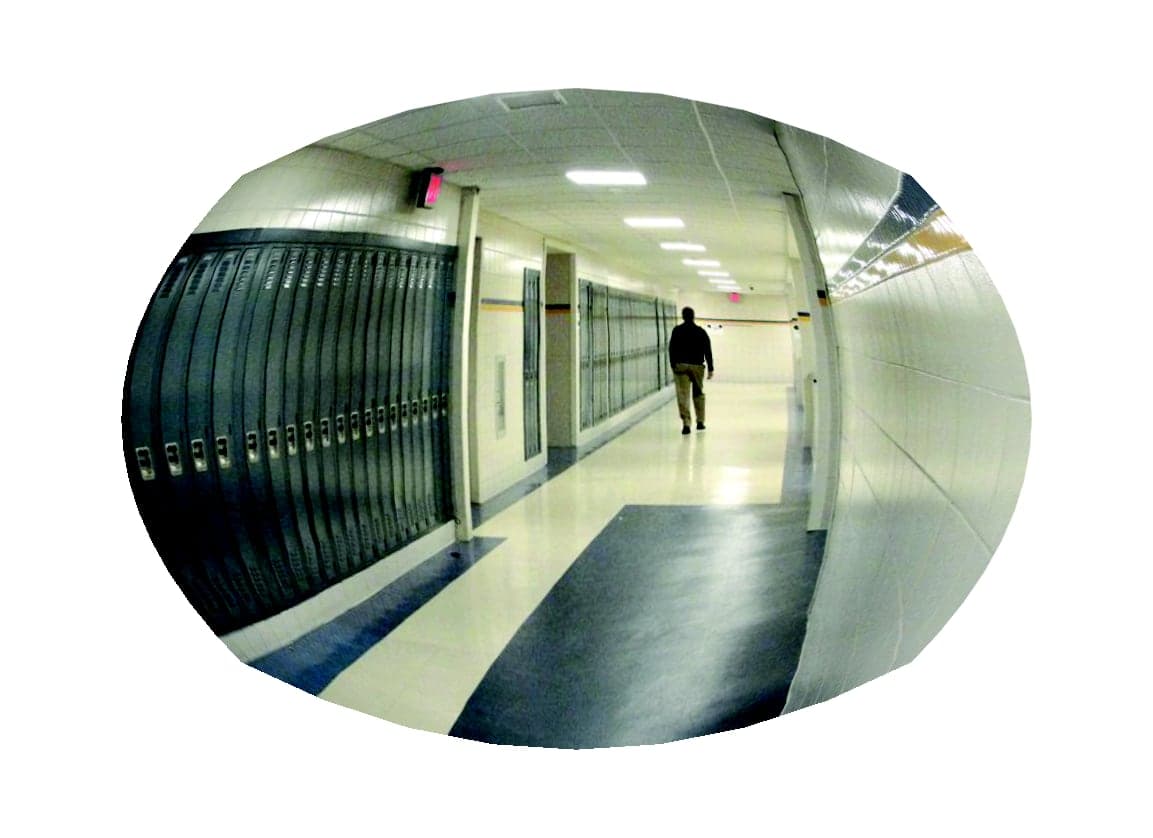
The manufacturer's school brochure names three places a mirror belongs: hallways, entrance and exit areas, and classrooms.
See the mirrors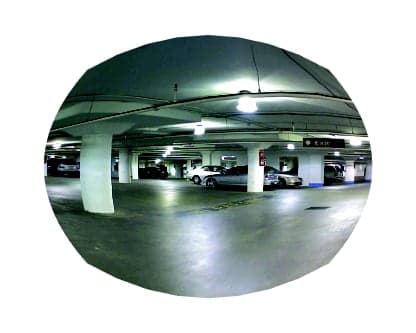
Parking Garages
A parking garage needs a convex mirror at every point where a driver has to commit to a turn without seeing what is around it: ramp turns, the exit onto the street, aisle corners at colum…
See the mirrors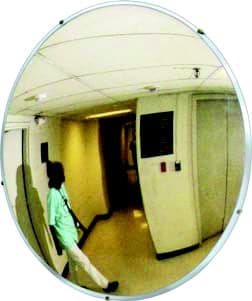
Hospitals & Healthcare
Hospital corridors are where beds, meal carts, wheelchairs, and staff in a hurry meet at right angles with no line of sight.
See the mirrorsRelated guides
Guides that go with this page
Backing type guide
Why the plastic back is the right choice in a wet environment, indoors or out.
Convex mirror mounting guide
Telescoping bracket installation on posts, fences, and walls.
Lens material guide
Acrylic versus polycarbonate for public pools and water parks.
Shop the categories
Every mirror on this page, by category
Outdoor mirrors
Weather-rated convex mirrors with plastic and steel backs.
Convex mirrors
The full convex line, indoor and outdoor, acrylic and polycarbonate.
DomeVex mirrors
180-degree mirrors for bulkheads and L-shaped pools.
Placement and sizing on this page follow the application sheets published by the manufacturer of our mirrors, Se-Kure Domes & Mirrors, and the specifications of the products in our catalog. Sizes and materials named here are the ones we stock; if your building needs something the sheet does not cover, call and we will work it out with you.
Free sizing help
Send us a photo of the corner and we will tell you what fits
A picture from where the person stands, plus a rough distance to the spot you cannot see, is usually enough for us to name the mirror, the size, and the bracket.