Solutions by facility
Hallway and Corner Mirrors for Office Buildings
Office buildings have the same blind corners as any other building, plus a lot of people carrying coffee and looking at their phones. The right mirror for an office hallway corner is a small one mounted at eye level, the Office-Eye mirror, on the wall facing the corner. T-intersections between corridors get a 180-degree half dome at the ceiling, and the open areas under a grid ceiling get a full dome; a drop-in version that sits in a 2 × 2 tile opening is coming soon.
17″
Office-Eye width, mounted at eye level
No drilling
adhesive or hook-and-loop mounting available
2′ × 2′
drop-in dome for grid ceilings (coming soon)
Acrylic
lightweight and shatter-resistant
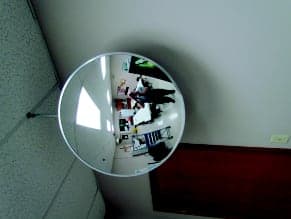
Nobody thinks of an office as a place that needs safety mirrors until the day two people round the same corner from opposite directions, one with a laptop and one with a full cup. It happens at the corner by the copy room, at the top of the stairwell, in the elevator lobby, and at the end of every row of cubicles. The injury is usually minor and the cleanup is not, and it keeps happening because nothing in the layout changed.
The manufacturer's office sheet describes a small set of mirrors that fit office geometry. The Office-Eye is the one built for it: an oblong 17-inch acrylic mirror that mounts at eye level on a wall, a door, or a cubicle partition, with screws, double-sided adhesive, or hook-and-loop, so it goes up in a leased space without putting holes in anything. Where corridors cross, a half dome at the ceiling does the job, and in open plan areas with a grid ceiling a full dome shows the whole room; a drop-in version that replaces one tile is coming soon.
Everything here is acrylic. It weighs a fraction of glass, does not shatter, and looks like a fixture rather than a piece of industrial equipment, which matters in a building where the tenant improvement package was chosen with some care.
Where the blind spots are
Where office blind spots are, and what to mount there
Start with the corners people complain about. In most offices that is three or four spots.
Spot 1
Hallway corners and end walls
- The problem
- A corridor turns 90 degrees and the wall hides whoever is coming the other way. The corner by the break room or the copy room is the classic spot because people are carrying something and moving fast.
- The mirror
- An Office-Eye mounted at eye level on the wall facing the corner, angled so each person sees the other side before they reach it. The manufacturer designed it for T-intersections, hallways, and stairwells with pedestrian traffic. It is small enough not to look out of place beside a nameplate.
Spot 2
Stairwell landings
- The problem
- A person coming up the stairs and a person opening the stairwell door from the corridor meet at the door. Neither can see the other, and the person on the stairs has nowhere to go.
- The mirror
- An Office-Eye or an 18-inch indoor convex mirror on the landing wall above the door, aimed down the stairs, so the person opening the door sees the stairs and the person on the stairs sees the door. The convex is the better choice for a tall stairwell because it covers more of the flight.
Spot 3
Corridor T-intersections
- The problem
- Where a side corridor meets the main hall, the person coming out of the side corridor has no view of either direction of the main hall.
- The mirror
- A 180-degree half dome mirror mounted at the ceiling on the far wall of the T. It is pressure-formed acrylic, mounts directly to the ceiling or wall, and shows both directions of the main corridor to the person coming out of the side hall. The 18-inch size fits a standard office corridor.
Spot 4
Open plan areas under a grid ceiling
- The problem
- Cubicle rows create a grid of short blind aisles. Nobody can see across the room, and the intersections between rows are as blind as any corridor corner.
- The mirror
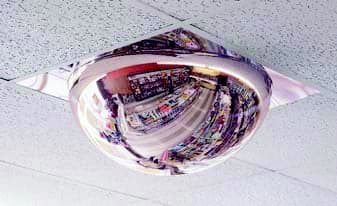
- A 360-degree full dome mirror in the ceiling, centered over the main intersection between rows. On a grid ceiling, the one-piece drop-in version, coming soon, sits in a 2 × 2 opening in place of a tile; the manufacturer designed it for grid ceilings and heavy traffic areas, and it fits any decor because it sits flush in the grid.
Spot 5
Elevator lobbies and reception
- The problem
- People step out of an elevator into a lobby they could not see, and visitors at reception cannot see who is approaching from the corridor behind them.
- The mirror
- An Office-Eye on the wall facing the elevator doors, and a second one at the reception desk positioned so the receptionist can see the corridor. Adhesive mounting means neither one needs a work order.
Recommended mirrors
Mirrors we recommend for offices
These are the catalog items behind the manufacturer's office sheet. Every one is acrylic, ships with hardware, and is made to order in the USA.
Dome Mirrors , Full Dome, Half Dome, & Quarter Dome Mirrors
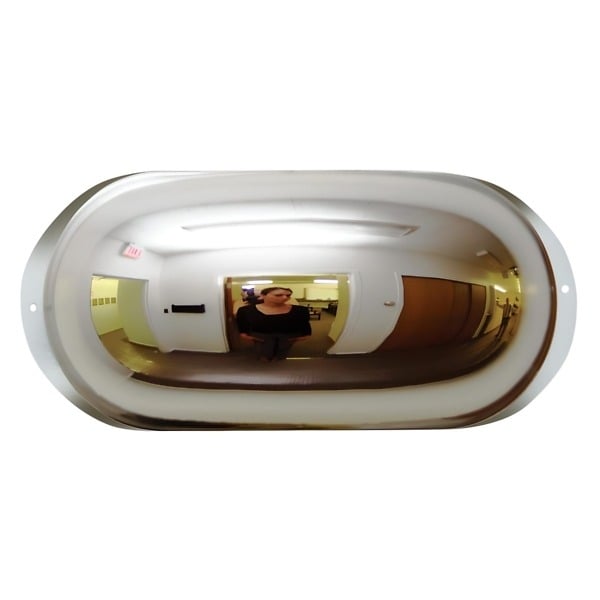
Se-Kure Office Eye-Oval Safety Mirror | 17" Convex Acrylic | Hallway & Elevator Security
- Ready to order
- 1 product images
- Built for safety visibility
Why for offices: The office corner mirror. 17 inches wide, mounts at eye level with screws, adhesive, or hook-and-loop. Built for hallways, stairwells, and elevators.
Dome Mirrors , Full Dome, Half Dome, & Quarter Dome Mirrors
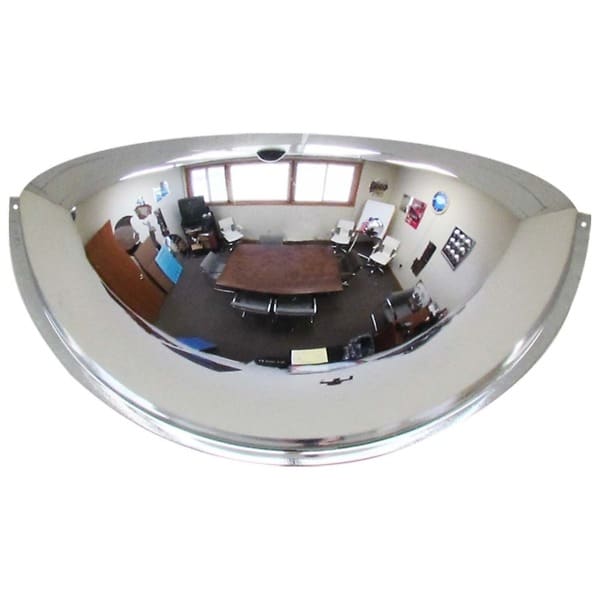
Security Mirror: 180° Half Dome Acrylic Safety Mirror
- 18 inch
- 26 inch
- 32 inch
Why for offices: For corridor T-intersections. Mounts flat to the ceiling or wall and shows both directions of the main hall.
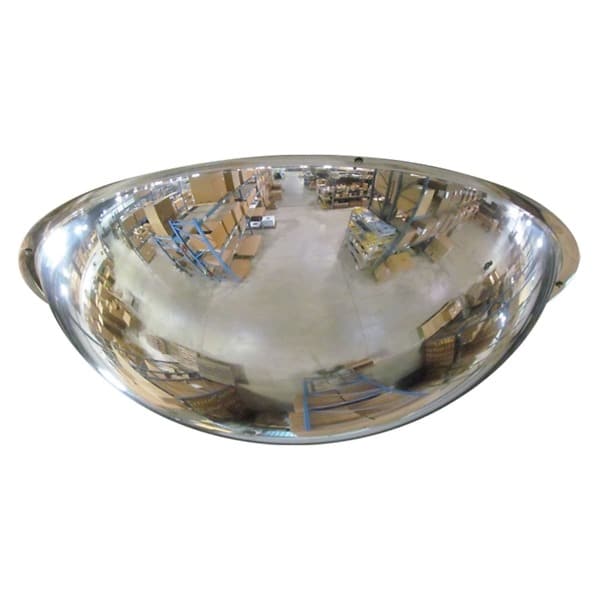
Dome Mirrors , Full Dome, Half Dome, & Quarter Dome Mirrors
360° Full Dome Acrylic Safety Mirror
- 8 inch
- 18 inch
- 26 inch
Why for offices: The open-plan dome. Mounts to the ceiling and shows the whole room from one spot; a drop-in version for a 2 × 2 grid opening is coming soon.
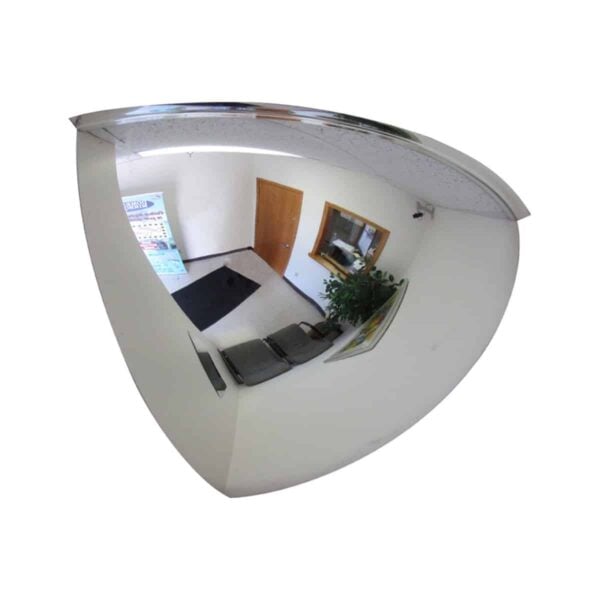
Dome Mirrors , Full Dome, Half Dome, & Quarter Dome Mirrors
90° Quarter Dome Acrylic Safety Mirrors
- 18 inch
- 26 inch
- 32 inch
Why for offices: For a corner where the corridor meets a wall and only one cross direction matters. A quarter dome sits tight in the ceiling-wall junction.
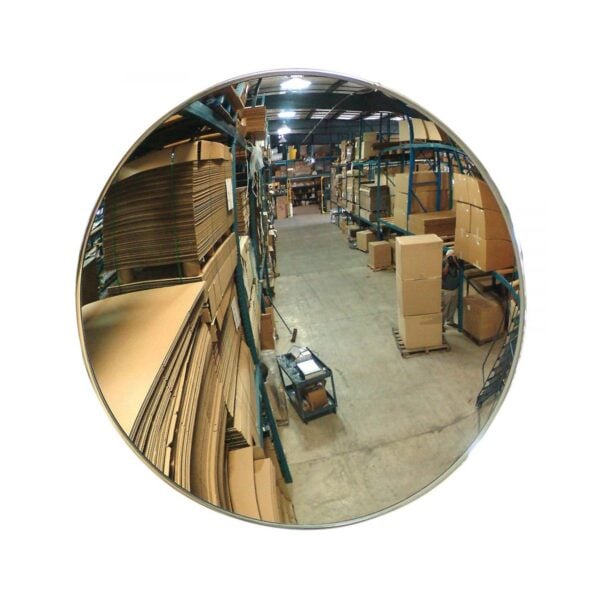
Indoor · Acrylic · Hardboard
Indoor Acrylic Convex Mirror — Hardboard Back
- 160° view
- 12″–36″ sizes
- Z-bracket included
Why for offices: For stairwells and back-of-house corridors where a taller view is needed than an Office-Eye gives. Z-bracket included.
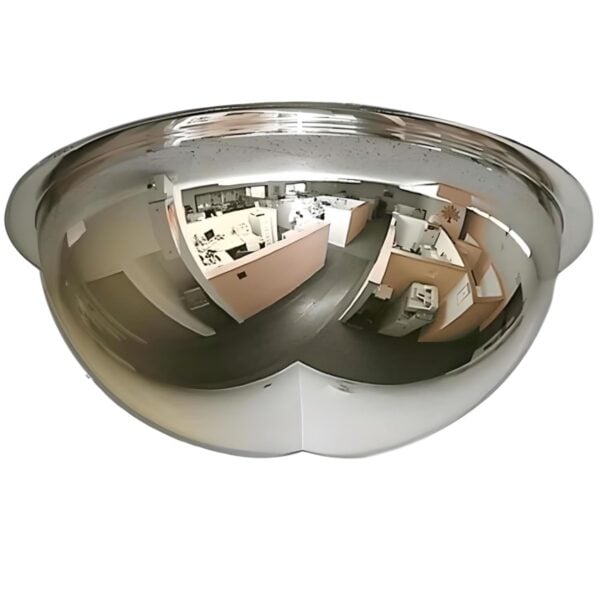
Dome Mirrors , Full Dome, Half Dome, & Quarter Dome Mirrors
270° Corner Dome Mirror - Acrylic Safety Mirror
- 18 inch
- 26 inch
- No Backing
Why for offices: For an outside corner, where a corridor wraps around a column or a room. A 270-degree corner dome shows all three approaches.
Sizing
Sizing office mirrors
Office mirrors are read from close range, so they are sized to the corridor rather than to a long viewing distance; see the dome sizing guide for ceiling heights above ten feet.
| Location | Recommended mirror | Size |
|---|---|---|
| Hallway corner, eye-level | Office-Eye | 17″ × 8.5″ |
| Stairwell landing | Indoor convex | 18″ |
| Corridor T-intersection | Half dome | 18″ (26″ for a wide hall) |
| Open plan grid ceiling | Full dome (drop-in version coming soon) | 18″ or 26″ |
| Outside corner around a column | 270° corner dome | 18″ or 26″ |
Ceiling height matters more than corridor length. Nine-foot ceilings take the 18-inch sizes; ten feet and up, go to 26 inches.
Mounting
Mounting in a leased office
Most office mirrors go up without a contractor. The Office-Eye in particular is designed to avoid holes in a wall you do not own.
- 1
Office-Eye with adhesive or hook-and-loop
Clean the wall, peel, and press. Mount at about 60 to 66 inches to center. On a cubicle partition or glass, hook-and-loop lets you move it later. Use the screw holes if the wall is block or the mirror will be in a high-traffic spot.
- 2
Half domes at the ceiling
Four screws through the flange into anchors or studs, with the top edge at the ceiling line; the dome mounting guide covers wall versus ceiling placement. The dome projects a few inches into the corridor at ceiling height, well above head level.
- 3
Domes in a grid ceiling
The stocked full dome mounts to the deck above the grid. With the drop-in version, coming soon, you remove one 2 × 2 tile at the intersection you want to cover and set the dome in its place on the T-bars. If the building has 2 × 4 tiles, use a 2 × 4 filler panel with a 2 × 2 opening, or mount the dome to the deck above.
- 4
Aim from the blind side
Stand where the person who cannot see stands, and have someone adjust the mirror until the hidden corridor or stairs shows in it. That is the correct angle.
Questions
Questions we get about offices
What kind of mirror is used at an office hallway corner?
An Office-Eye. It is an oblong acrylic mirror 17 inches wide and about 8.5 inches tall that mounts at eye level on the wall facing the corner, using screws, double-sided adhesive, or hook-and-loop. It was designed for T-intersections, hallways, and stairwells with foot traffic.
Can I install a safety mirror without drilling into the wall?
Yes. The Office-Eye mounts with double-sided adhesive or hook-and-loop on drywall, glass, doors, and cubicle partitions. The drop-in full dome, coming soon, sits in a grid ceiling in place of a tile without any fasteners in the wall.
What size dome fits a drop ceiling?
The standard grid opening is 2 feet by 2 feet. An 18-inch or 26-inch full dome mounts to the deck above the grid, and a one-piece drop-in version that sits in the 2 × 2 opening on the T-bars is coming soon. If your ceiling uses 2 × 4 tiles, mount to the deck or use a filler panel with a 2 × 2 cutout.
Half dome or Office-Eye for a corridor intersection?
Half dome at a T or four-way where two corridors cross and both directions matter. Office-Eye at a simple 90-degree corner, a stairwell door, or an elevator, where the mirror is read by one person standing near it.
Will these mirrors look out of place in a professional office?
The Office-Eye is about the size of a large picture frame and sits at eye level like one. Drop-in domes, coming soon, sit flush in the ceiling grid. Neither looks like warehouse equipment, and both are acrylic with a clean edge.
Other facilities
Mirrors for other kinds of buildings
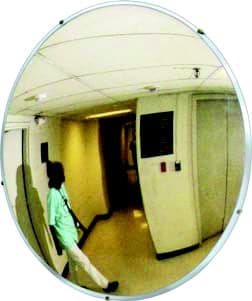
Hospitals & Healthcare
Hospital corridors are where beds, meal carts, wheelchairs, and staff in a hurry meet at right angles with no line of sight.
See the mirrors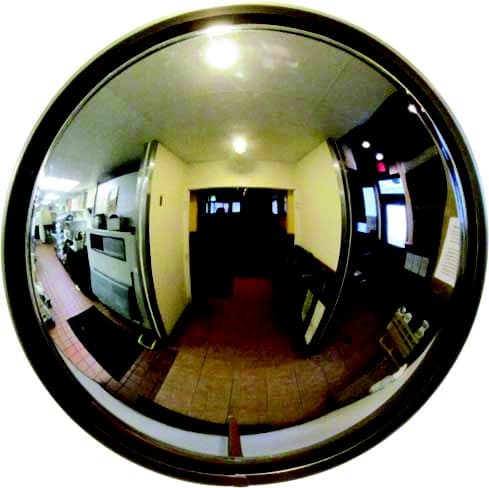
Restaurants
The mirror that pays for itself fastest in a restaurant is the one over the kitchen door.
See the mirrors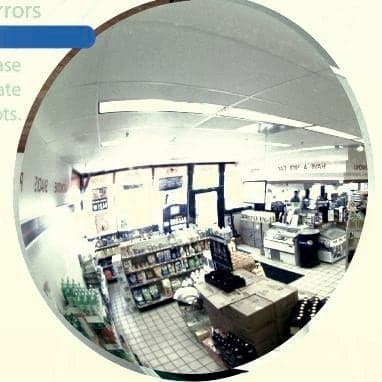
Convenience Stores
A convenience store needs two kinds of mirror: a dome mirror or DomeVex wide-view mirror mounted where the clerk can see the whole sales floor from the register, and smaller convex mirror…
See the mirrorsRelated guides
Guides that go with this page
Convex vs dome mirror guide
When a corner needs a single-direction mirror and when it needs a dome.
Dome mounting options
Grid, ceiling, and wall mounting for half and full domes.
Dome mirror sizing guide
Matching dome diameter to ceiling height and room size.
Shop the categories
Every mirror on this page, by category
Dome mirrors
Half, full, quarter, and 270-degree corner domes, plus the Office-Eye.
Convex mirrors
Indoor convex mirrors for stairwells and back corridors.
Placement and sizing on this page follow the application sheets published by the manufacturer of our mirrors, Se-Kure Domes & Mirrors, and the specifications of the products in our catalog. Sizes and materials named here are the ones we stock; if your building needs something the sheet does not cover, call and we will work it out with you.
Free sizing help
Send us a photo of the corner and we will tell you what fits
A picture from where the person stands, plus a rough distance to the spot you cannot see, is usually enough for us to name the mirror, the size, and the bracket.