How To Mount A Convex Mirror
Published July 27, 2026 - Last updated October 12, 2026
The right convex mirror mount depends on mirror diameter, indoor versus outdoor exposure, and how much adjustment the installer needs after the mirror is fastened. Small indoor mirrors can use a Z-bracket. Outdoor mirrors, pole-mounted mirrors, and larger diameters should use telescoping brackets matched to the mirror size.
Bracket selection by mirror size
| Mirror size | Indoor recommendation | Outdoor recommendation |
|---|---|---|
| 12"-18" | Z-bracket | Single-arm telescoping |
| 20"-24" | Z-bracket or single-arm telescoping | Single-arm telescoping |
| 26"-30" | Single-arm or double-arm telescoping | Double-arm telescoping |
| 32"-48" | Double-arm telescoping | Triple-arm telescoping |
Use more mounting arms as the mirror gets larger, heavier, or more exposed to wind. For any 48 inch outdoor convex mirror, use a triple-arm telescoping mount rather than a double-arm mount.
Z-brackets: small indoor mirrors
A Z-bracket is the simplest mount for small indoor convex mirrors on a flat wall. It keeps the mirror close to the mounting surface and works well in hallways, retail aisles, office corridors, and warehouse corners where wind load is not a factor.
The Z-bracket assembly includes a pivot ball behind the mirror, so it can be rotated and aimed within its close-wall clearance. It is not the right choice when the mirror must clear a fence, post, parked vehicle, deep obstruction, or outdoor wind exposure.
Download the Z-bracket installation guide.
Telescoping brackets: outdoor adjustment and support
Single, double, and triple telescoping brackets adjust from 14.5 inches to 21.5 inches from the mounting surface. They do not use a pivot ball. The mirror-end eye bolt can rotate roughly 180 degrees, the center section allows rotation, and the mounting-surface end can be adjusted for vertical or horizontal positioning.
- Single-arm telescoping: the standard outdoor mount for 12 inch through 24 inch mirrors and indoor installs that need more clearance than a Z-bracket.
- Double-arm telescoping: recommended for 26 inch through 30 inch outdoor mirrors and larger indoor mirrors that need extra support.
- Triple-arm telescoping: recommended for outdoor mirrors from 32 inch through 48 inch, large mirrors 36 inch and up, and high-wind areas.
Mounting PDFs and bracket drawings
Use the drawing that matches the bracket style on the order. Each card opens the matching installation PDF.
 Z-bracket
 installation guide
Indoor close-wall mount with pivot-ball aiming behind the mirror.
Open PDF ->
Z-bracket
Z-bracket installation guide
Indoor close-wall mount with pivot-ball aiming behind the mirror.
Open PDF ->
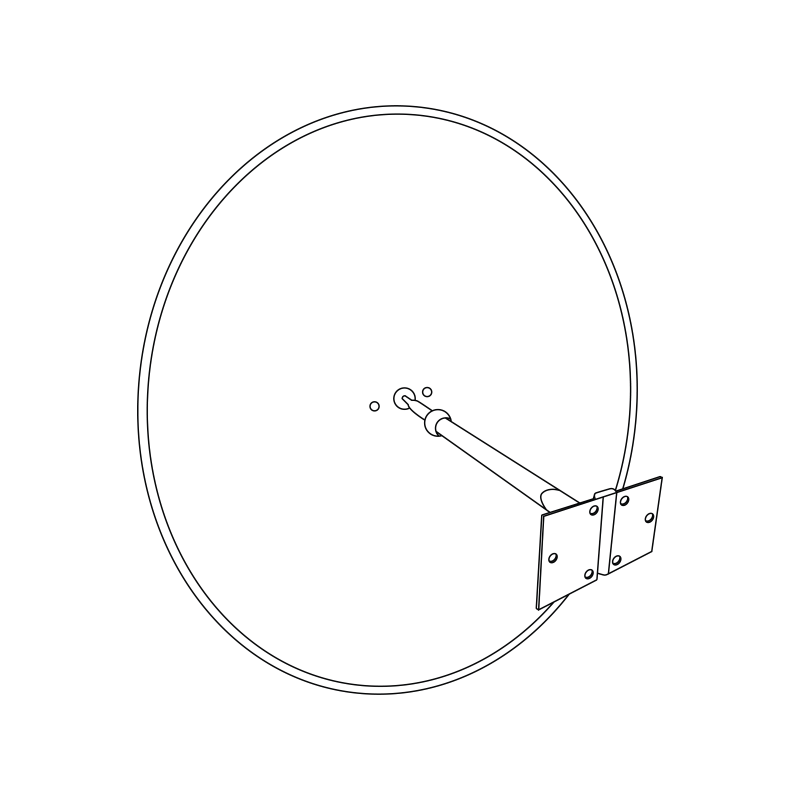 Single arm
Single telescoping mount guide
Recommended for smaller outdoor mirrors and indoor installs that need clearance.
Open PDF ->
Single arm
Single telescoping mount guide
Recommended for smaller outdoor mirrors and indoor installs that need clearance.
Open PDF ->
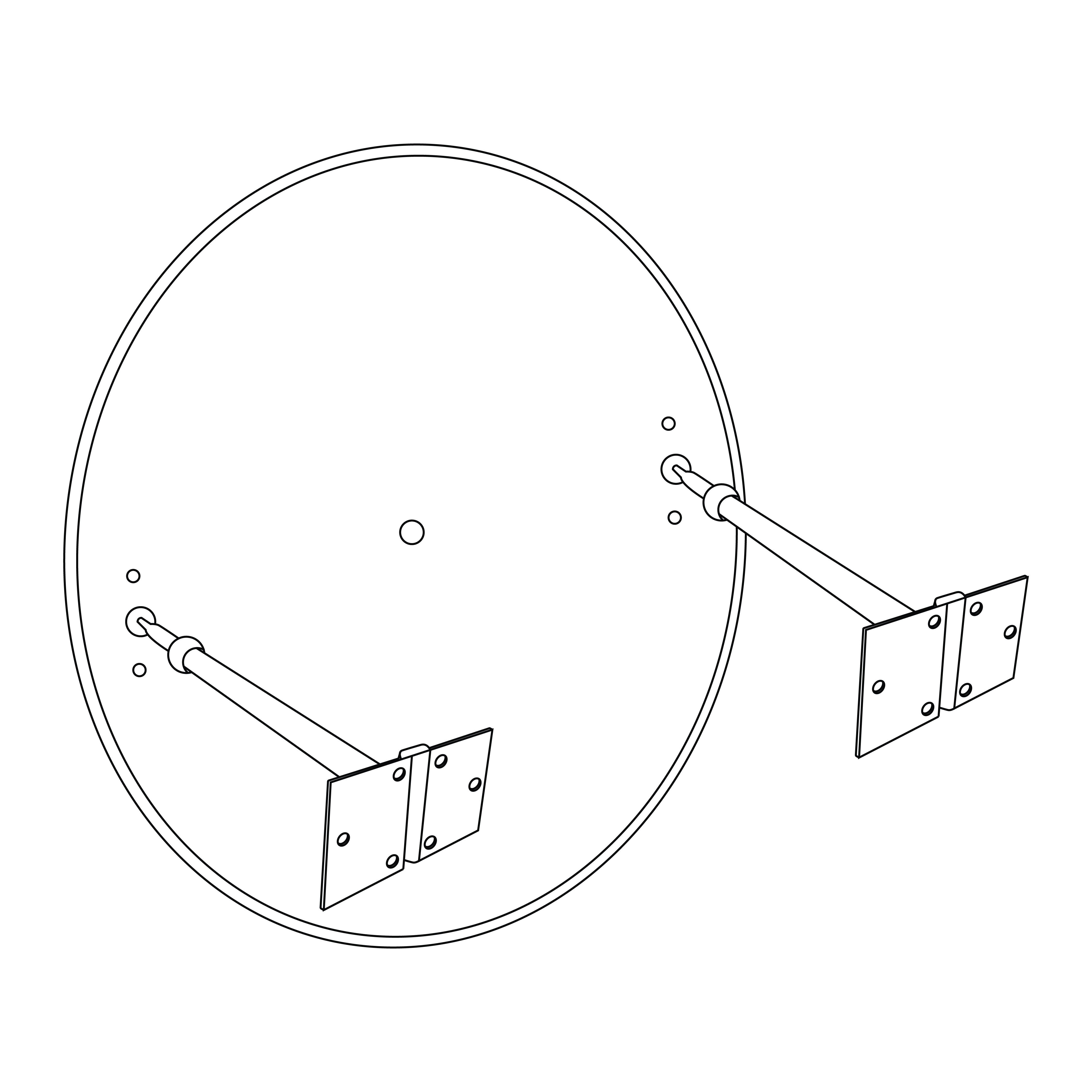 Double arm
Double telescoping mount guide
Recommended for 26 inch through 30 inch outdoor mirrors.
Open PDF ->
Double arm
Double telescoping mount guide
Recommended for 26 inch through 30 inch outdoor mirrors.
Open PDF ->
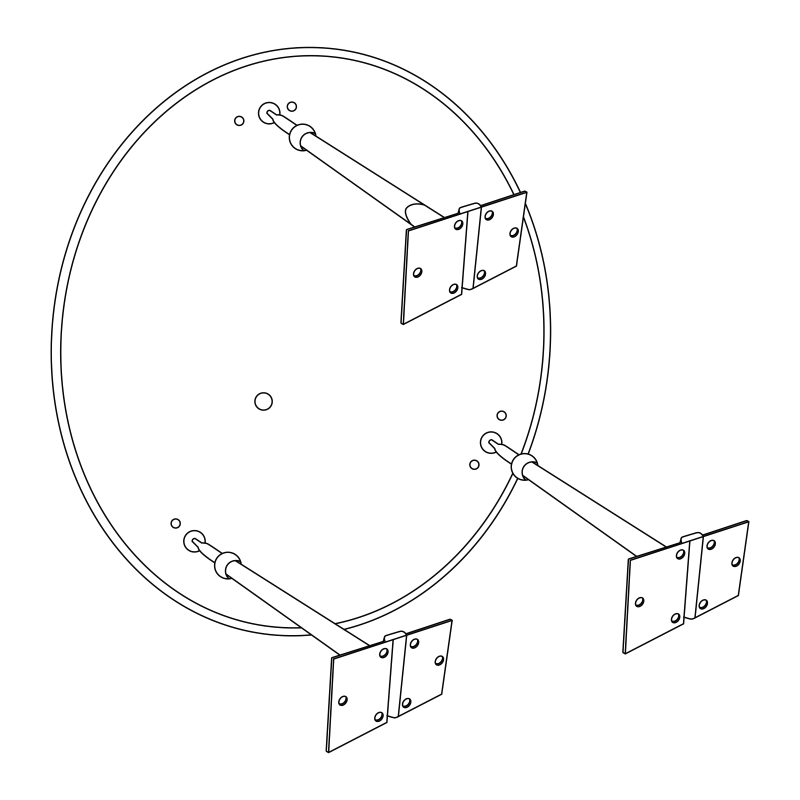 Triple arm
Triple telescoping mount guide
Recommended for 32 inch through 48 inch outdoor mirrors, 36 inch and larger mirrors, and high-wind areas.
Open PDF ->
Triple arm
Triple telescoping mount guide
Recommended for 32 inch through 48 inch outdoor mirrors, 36 inch and larger mirrors, and high-wind areas.
Open PDF ->
Mount height and tilt angle
For most warehouse, retail, and facility applications, mount the mirror so its center sits 7 to 10 feet above the floor and angle the viewing surface slightly downward toward the line of approach. Outdoor traffic mirrors often mount higher, usually 10 to 14 feet, so they clear delivery trucks, parked vehicles, and snow banks while still showing the decision point.
Start with the top of the mirror tilted downward 5 to 15 degrees. After installation, walk or drive the approach path and adjust until the full mirror face is visible from the point where a person or driver has to make a decision.
Pole mounting
National Safety Mirror does not sell poles, but convex mirrors can be installed on customer-supplied posts or poles. Single and double telescoping mounts can be fastened with steel bands around the pole or direct-drilled if the pole width and material provide enough bearing surface for the bracket hardware.
For outdoor pole installations, HDPE or heavy-duty plastic backing is usually the best default because it is weatherproof, rust-proof, lighter than steel, and handles salt air well. Specify galvanized steel only when the job specifically needs the extra rigidity or weight of steel.
For a triple-arm post installation, use a square cutout or backer board around 36 inches by 36 inches. A 3/4 inch pressure-treated board or a weatherproofed painted board is ideal. Place the brackets roughly 21 inches apart and attach them about 6 inches in from the mirror rim.
Quick decision guide
- Choose a Z-bracket for small indoor mirrors mounted close to a flat wall.
- Choose a single-arm telescoping bracket for smaller outdoor mirrors and indoor mirrors that need more clearance.
- Choose a double-arm telescoping bracket for 26 inch through 30 inch outdoor mirrors.
- Choose a triple-arm telescoping bracket for 32 inch through 48 inch outdoor mirrors, 36 inch and larger mirrors, high-wind areas, and large post installs.
Related resources
Keep moving through the right support pages
Use the connected NSM policy and help pages below instead of backing out to search again.
Driveway mirrors with telescoping mounts
HDPE-backed outdoor convex mirrors for blind exits, fences, walls, and parking-lot turns.
Heavy-duty traffic mirrors
Polycarbonate traffic mirrors with galvanized steel backing for exposed outdoor installs.
Rectangular outdoor convex mirrors
Use these when a garage, low-clearance lane, or building corner needs a wider horizontal view.
Lens material guide
Confirm acrylic vs polycarbonate before finalizing the mounted mirror.