Safety Mirror
Proactive Planning for Intersection and Blind Spot Safety in Warehouses
Plan warehouse mirror placement early so blind corners, aisle crossings, and forklift sight lines are addressed before the building is fully in use.
Why this article matters
A warehouse-planning article that argues for addressing blind corners and forklift intersections before racking, lanes, and traffic habits are locked in.
- Key point: Blind-spot planning is easier before racks, lanes, and workflow patterns are fixed.
- Key point: Mirror placement should follow actual travel paths, mast heights, and load positions.
- Key point: A small investment in visibility tools is usually cheaper than repeated traffic incidents.
On This Page
Related Categories And Products
Blind-spot safety is easier to solve when it is part of the warehouse plan instead of an after-the-fact patch. If forklift routes, rack ends, and pedestrian walkways are likely to create hidden crossings, mirrors should be part of the conversation before the layout becomes expensive to change.
One aspect of facility safety that is often overlooked during planning is intersection and blind spot safety. Over the past 18 months, I have been asked to help address this issue at several distribution centers nationwide. Some facilities were older, while others were relatively new, and they lacked adequate safety measures for intersections and blind spots. Forklift operators were left to sound horns when approaching these areas, which is not a sufficient solution.
The High Cost of Reactive Safety Measures
One company learned this the hard way when an employee lost a limb in a collision between two moving vehicles at an intersection. The company's national safety director recalled seeing various safety options at trade shows and contacted us to develop an intersection and blind spot protection program for their facilities.
This single accident likely cost more than implementing a mirror solution across all their distribution centers would have. Proactive planning helps protect products, machinery, and, most importantly, staff. Putting a complete safety plan in place can result in meaningful cost savings.
Practical Solutions for Intersection and Blind Spot Safety
Facility managers and safety directors are responsible for the safety of their operations and can seek help from facility safety professionals. If your safety distributor does not offer solutions, ask them to find the best answers. Here are some basic guidelines for using mirrors:
- Domes and convex mirrors: One inch of mirror diameter provides approximately one foot of viewing distance (e.g., a 36″ mirror offers about a 36′ view)
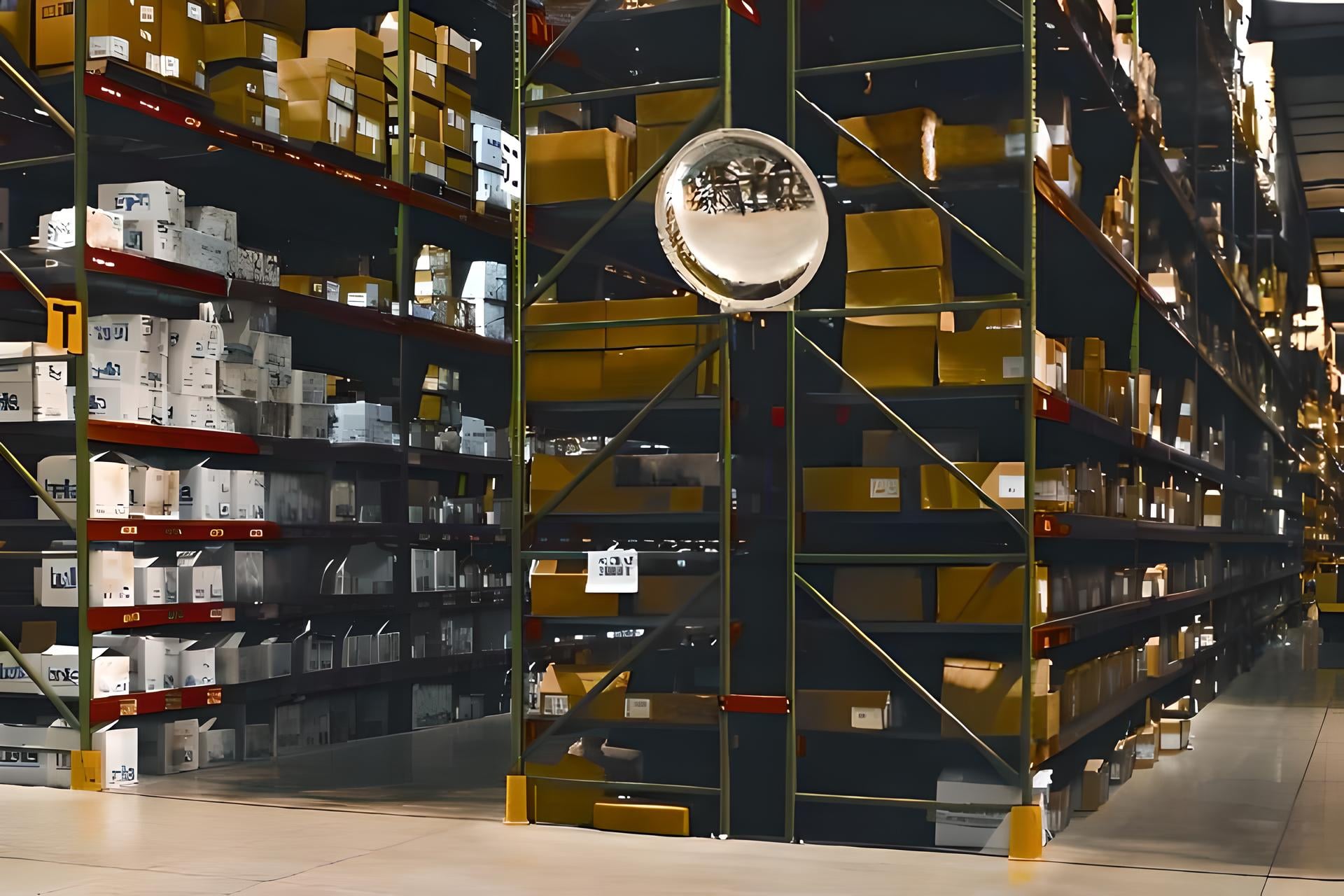
- Four-way intersections: Hang mirrored domes with the bottom 1-2 feet above the highest moving forklift or load, and account for the mounted dome's height when evaluating viewing distances
- Three-way intersections: Use half domes or dome mirrors mounted at eye level, flat against the wall at the end of an aisle
Engage Your Team for Safety
One of the best sources for identifying hazardous areas in your building is your forklift operators and the pedestrians who regularly walk the aisles. Taking the first step toward your safety plan can build confidence among your staff and is often recognized by insurance providers and OSHA visitors.
Trying to save on prevention early can cost more in the long run. Investing in proactive safety measures helps protect your employees, products, and business.
Next Steps