Convex Mirror
Enhancing Safety with Convex and Dome Mirrors: Applications in Traffic, Offices, and Warehouses
Learn where convex mirrors and dome mirrors fit best, how each improves visibility, and which installations benefit most from a wider field of view.
Why this article matters
A practical overview of where convex and dome mirrors solve different visibility problems in traffic lanes, office corners, and warehouse intersections.
- Key point: Use convex mirrors when drivers or operators need a single approach view.
- Key point: Use dome mirrors when several directions must be seen at the same time.
- Key point: Match lens material, backing, and bracket choice to the environment, not just the mirror shape.
On This Page
Related Categories And Products
Convex and dome mirrors solve different visibility problems, and the right choice usually comes down to how many directions need to be seen at once. This guide walks through common traffic, office, and warehouse applications so you can match the mirror style to the real blind spot instead of guessing.
Traffic Safety at 3-Way Intersections
Three-way intersections, or T-intersections, can be hazardous because of limited visibility. Blind spots created by buildings, trees, and parked vehicles can obscure oncoming traffic and increase the risk of collisions. A well-placed traffic mirror can reduce that risk.
Convex mirrors and dome mirrors can improve sight lines at these intersections. Convex mirrors, with their curved surface, provide a wider field of view than flat mirrors. When placed well, they let drivers see around blind corners and spot approaching vehicles, pedestrians, or cyclists in time to react.
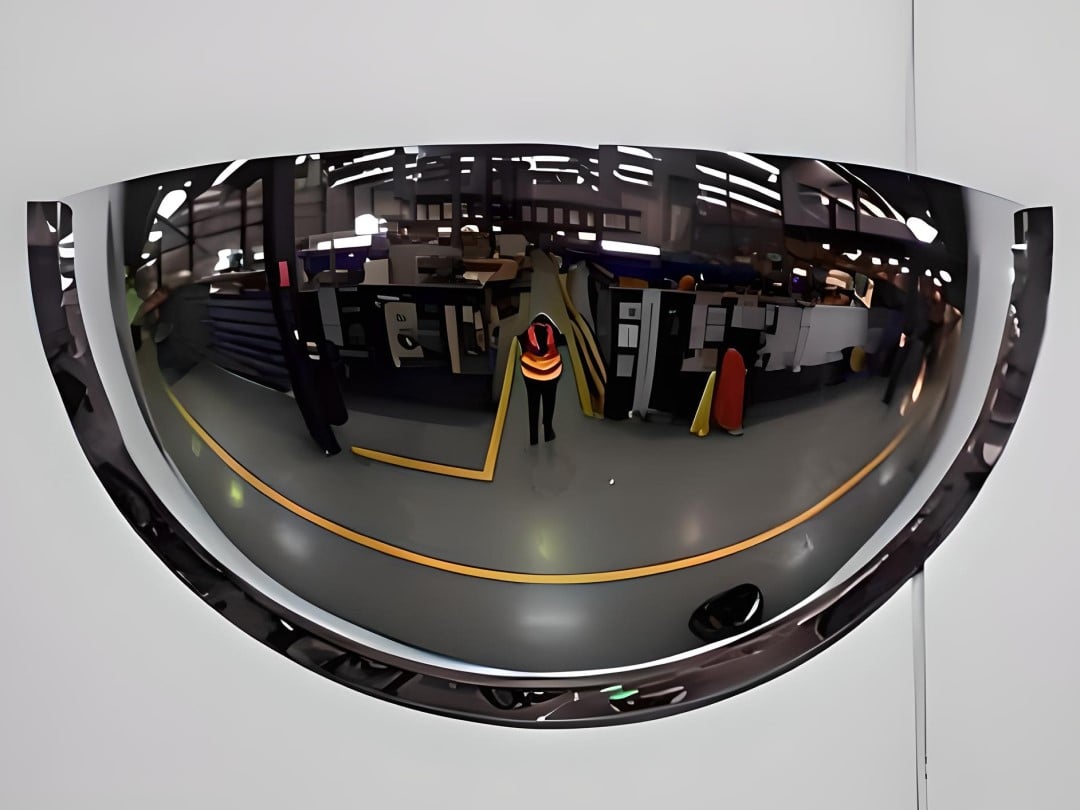
Dome mirrors in full and half-dome mirror configurations offer a more comprehensive view. Full-dome mirrors suit intersections with multiple blind spots, while half-dome mirrors, such as the 180-degree half-dome, provide a view of oncoming traffic from either the right or left side of the intersection.
Enhance Office Safety with a Safety Mirror
In office settings, convex and dome mirrors can help prevent collisions in high-traffic areas. Placing mirrors at blind corners, such as intersecting hallways or doorways, can alert employees to oncoming foot traffic and reduce the risk of collisions and injuries.
Convex mirrors can also monitor areas that are hard to see from a seated position, such as reception desks or cubicles. By providing a wider field of view, these mirrors help employees stay aware of their surroundings and respond to potential hazards.
Improve Warehouse Safety with Convex and Dome Mirrors
Warehouses are high-activity environments where heavy machinery, forklifts, and employees on foot operate in close proximity. Limited visibility in these settings can lead to serious accidents and injuries.
Convex and dome mirrors can improve warehouse safety by providing better visibility around corners, at intersections, and in high-traffic areas. Mirrors can be placed to reduce blind spots and give forklift operators and employees a clearer view of their surroundings.
In addition to helping vehicle operators, mirrors help pedestrian employees move through the warehouse more safely. Placing mirrors at the ends of aisles and at intersections lets employees see oncoming traffic and avoid collisions.
Proper Safety Mirror Selection and Placement
Selecting the right type and size of mirror for each application is important to getting the most safety benefit from convex and dome mirrors. Factors to consider include the size of the area, the level of traffic, and the specific location of blind spots.
Placement matters as well. Mirrors should be installed at a height that provides a good view for the intended users, whether vehicle operators, pedestrians, or employees in an office or warehouse.
Convex mirrors should be mounted so drivers can see the reflection of oncoming traffic. A typical height is between 5 and 8 feet, depending on the location and the size of the vehicles using the intersection.
Dome mirrors should be installed high enough to provide a clear view over obstacles such as parked cars or low walls. A common height for dome mirrors is between 12 and 20 feet.
Mirror Designs: The Wide Angle DomeVex Convex Mirror
Along with traditional convex and dome mirrors, newer designs combine features of both. One example is the DomeVex Wide View Mirror.
DomeVex mirrors use a shallower dome shape that provides a broader viewing angle than a standard convex mirror while reducing the distortion often associated with full dome mirrors. This makes DomeVex mirrors a practical option for a range of intersection types and environments.
Mirror Maintenance
Regular maintenance keeps convex and dome mirrors providing clear visibility. Dust, dirt, and debris can build up on the reflective surface and reduce the mirror's effectiveness.
To clean acrylic or polycarbonate mirrors, use a soft, damp cloth and mild soap. Avoid abrasive materials, harsh chemicals, and window cleaning fluids, which can scratch or damage the surface. A wax-based furniture polish can help maintain the mirror's shine.
Convex and dome mirrors are useful safety tools in many settings, including traffic intersections, offices, and warehouses. By improving visibility and reducing blind spots, they help prevent accidents and improve safety for drivers, pedestrians, and employees.
Proper mirror selection, placement, and maintenance are key to getting the most from these safety devices. By using convex and dome mirrors in high-risk areas and following best practices, businesses and communities can create safer environments.
Next Steps