Browse garage mirrors
Compare mirrors for ramps, columns, and low-clearance garages.

Forklift Safety Mirror — Shape Options
5 configurations · from $47.95
Product specs
SKU FLM
or 4 interest-free payments of $11.99 with Afterpay
Compare every SKU, description, and price in the options table below before adding to cart.
Best for
Sizing help
Options
Compare each option by SKU, price, and description, then add the exact row you want to cart.
| Preview | SKU | Size | Bracket | Covers* | Price | Description | Qty | Add |
|---|---|---|---|---|---|---|---|---|
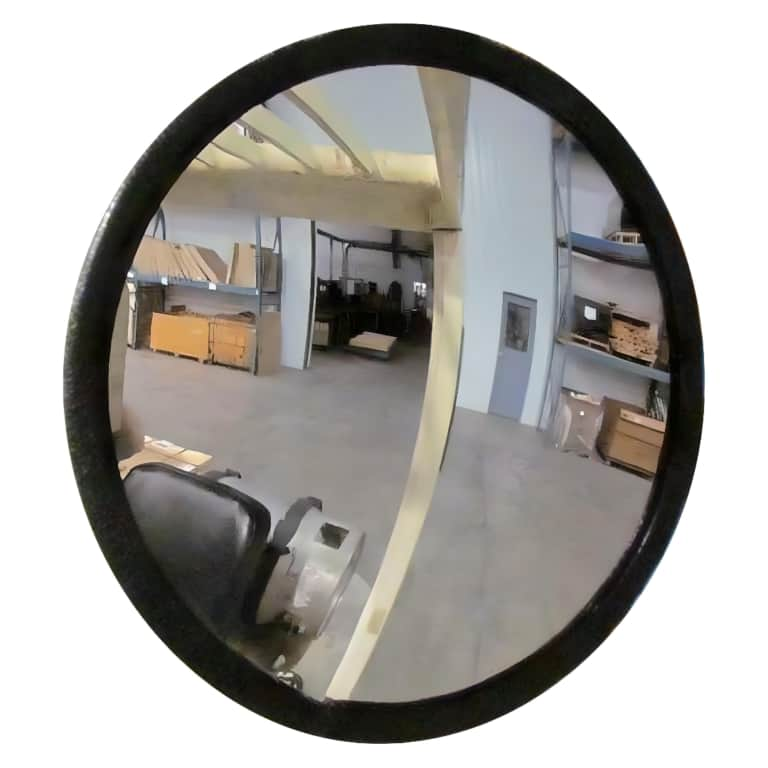
 | DM-CFM-5-GL | other | Telescoping bracket | custom coverage | $59.95 | 5 inch Glass Forklif Mirror | ||
| DM-CFM-6-GL | other | Telescoping bracket | custom coverage | $60.95 | 6 inch Glass Forklif Mirror | ||
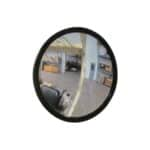 | DM-CFM-8 | other | Telescoping bracket | custom coverage | $47.95 | 8 inch Acrylic Convex Forklift Mirror | ||
| DM-CFM-8-GL | other | Telescoping bracket | custom coverage | $67.95 | 8 inch Glass Forklif Mirror | ||
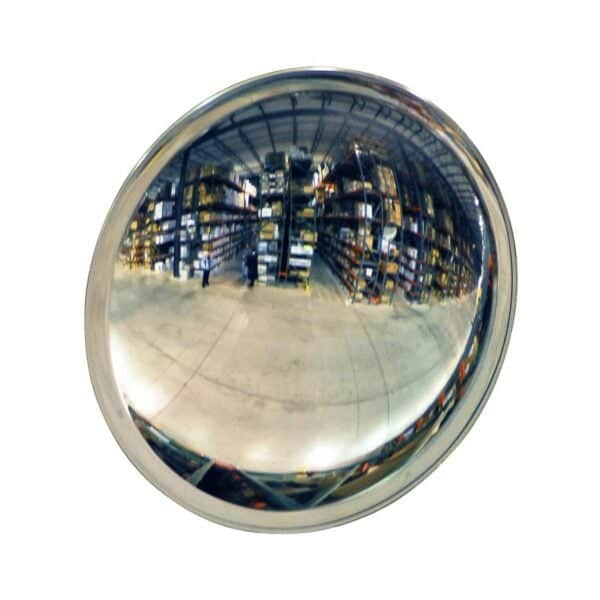
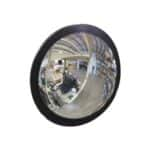 | DM-DFM-8 | other | Telescoping bracket | custom coverage | $47.95 | 8 inch Acrylic Dome Forklift Mirror |
* Coverage estimate uses the 1-inch = 1.5-foot guideline from the NSM sizing guide.
Operating forklifts in warehouses and busy industrial environments requires constant vigilance. Blind spots pose a significant threat, potentially leading to accidents and injuries. The National Safety Mirror is a crucial safety solution that significantly reduces blind spots, enhances visibility, and promotes a safer work environment for forklift operators and pedestrians.
Forklifts have inherent blind spots in the front, rear, and sides. These areas can easily obscure pedestrians, oncoming traffic, or obstacles, creating dangerous situations. The National Safety Mirror effectively addresses this challenge by providing a wider field of view, allowing operators to see what's behind, beside, and around them. This improved visibility significantly reduces accidents and near misses, promoting a safer work environment for everyone in your facility.
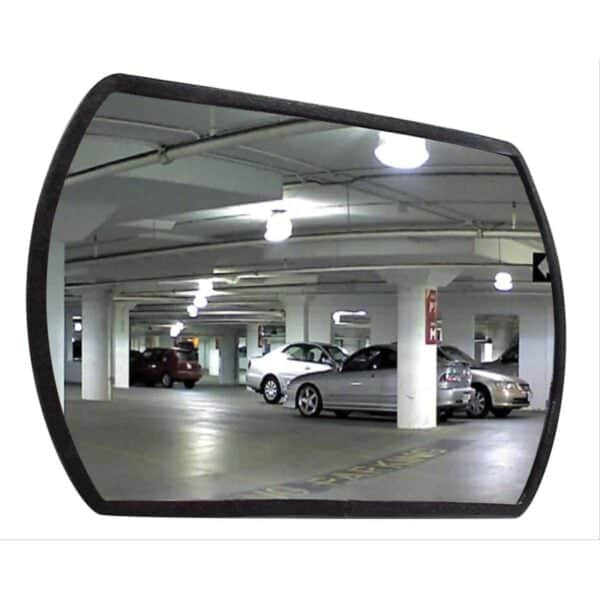
The National Safety Mirror utilizes a strategic convex design to maximize the reflected area. This curved surface provides a panoramic view, encompassing a broader range than a traditional flat mirror. Operators can effortlessly see pedestrians, oncoming forklifts, and potential hazards in aisles, corners, and other tight spaces, allowing them to react quickly and avoid collisions.
National Safety Mirror offers two main types of mirrors to suit your specific needs:
National Safety Mirrors come in two primary mirror shapes: convex and dome. While both effectively eliminate blind spots and enhance visibility, they offer slightly different advantages:
Finding the Right Balance
Ultimately, the best choice between a convex and dome mirror depends on your specific needs and priorities:
The Best of Both Worlds
Some users opt for a combination approach, mounting a convex mirror on one side of the forklift and a dome mirror on the other. This strategy provides a balance between a wide viewing area and a clearer image, ensuring optimal visibility in various situations.


All National Safety Mirrors, regardless of material or size, come with a universal Z-bracket. This bracket allows for easy and secure mounting on most forklift frames. The user-friendly design minimizes installation time and ensures the mirror remains stable and vibration-free during operation.
Equipping your forklifts with National Safety Mirrors is not just an investment in safety; it's an investment in your business's productivity and efficiency. By preventing accidents and injuries, you can minimize downtime, reduce costs associated with repairs and replacements, and create a more positive work environment.
Make safety a priority in your warehouse or industrial facility. Order your National Safety Mirrors today and experience enhanced visibility, reduced blind spots, and a safer work environment.
Forklift Mirrors Lens Shape: convex, dome
Lens Type: Acrylic, Glass
Forklift Mirror Size: 5 inch, 6 inch, 8 inch
Made-to-order mirrors are typically ready to ship within 4–9 business days.
For non-warranty returns, request an RMA within 30 days of delivery. Approved returns must be new and in their original packaging; a 25% restocking fee and buyer-paid return shipping apply.
Report shipping damage within seven business days of delivery.
If you need a bulk quote, project guidance, or confirmation before ordering, you can request a bulk quote or call NSM at 678-214-3440 before checkout.
How long do mirrors take to ship?
Inspection mirrors typically ship within 3–5 business days. Other mirrors are made to order in Sturgis, Michigan, and are typically ready to ship within 4–9 business days. Some common mirrors may already be available; contact NSM for current shipment times.
How do acrylic and polycarbonate compare for impact and scratching?
Impact resistance describes resistance to a strike or shattering; it does not describe surface hardness or scratch resistance. NSM uses approximate material comparisons of 15× glass for acrylic and 250× for polycarbonate. Published figures vary by grade, thickness and test: Advanced Plastiform, for example, cites about 10× for acrylic and 250× for polycarbonate. Acrylic is generally more scratch resistant than uncoated polycarbonate, while glass is harder at the surface. These material comparisons are not a model-specific test rating or a bullet-resistance certification.
Sources: KastLite: acrylic versus polycarbonate · Advanced Plastiform: impact and scratch resistance · Palram: polycarbonate glazing material comparison
What are the return and warranty terms?
Report shipping damage within seven business days of delivery. For non-warranty returns, request an RMA within 30 days of receipt and return the merchandise within 30 days after the RMA is issued. Approved returns must be new and in original packaging; a 25% restocking fee and buyer-paid return shipping apply. Special, discounted, large-quantity and ALL SALES FINAL orders are excluded as detailed in the Returns policy. The manufacturer provides a one-year replacement warranty for defects in material or workmanship under normal use and care, subject to its full warranty terms.
Sources: National Safety Mirror returns policy · National Safety Mirror manufacturer warranty · National Safety Mirror shipping policy
How do I choose dome mirror placement by viewing angle?
Choose the dome format by the number of approach directions you need to see. A 360 degree full dome belongs at the center of a four-way intersection or open area. A 180 degree half dome belongs on a wall or at the end of a T-intersection. A 90 degree quarter dome fits tight into an inside corner for two-way corner coverage. A 270 degree corner dome wraps an outside corner where three approach directions need visibility. The Office-Eye is different from the ceiling domes: it mounts at eye level on a wall, door, or partition so someone leaving an office, conference room, elevator, or hallway can see cross traffic before stepping out.
Sources: Se-Kure dome mirror brochure
Where should a 360 degree full dome mirror be placed?
Place a 360 degree full dome overhead at the center of a four-way intersection, open floor crossing, stockroom aisle crossing, or lobby where traffic can arrive from every direction. The brochure diagram places the dome at the center of the grid with arrows pointing north, south, east, and west. That means the mirror is intended to be read from all approaches, not from one wall only. Use a full dome when the hazard is multi-directional and users need awareness of the whole intersection before entering it.
Sources: Se-Kure dome mirror brochure
Where should a 180 degree half dome mirror be placed?
Place a 180 degree half dome against a wall, above an aisle end, or at the head of a T-intersection where the viewer needs to see activity across the open half of the space. The brochure shows the half dome on the wall side of a corridor with arrows fanning into the walkway. This is the right choice for offices, hotels, hospitals, retail stores, stockroom doors, and other T-intersections where ceiling or wall mounting can show both directions of cross traffic.
Sources: Se-Kure dome mirror brochure
Where should a 90 degree quarter dome mirror be placed?
Place a 90 degree quarter dome tight into an inside corner where two corridors, walls, or display runs meet. The brochure diagram shows the quarter dome nested into the corner with arrows covering the two legs of the corner and the diagonal view into the room. Use this format when a full or half dome would show more than the application needs, or when the mirror must stay tucked into a ceiling-wall corner for elevator, classroom, or two-way intersection safety.
Sources: Se-Kure dome mirror brochure
Where should a 270 degree corner dome mirror be placed?
Place a 270 degree corner dome on an outside corner, column, or projecting wall edge where people approach from three directions. The brochure diagram shows the mirror wrapping the corner with arrows covering the corridor on one side, the corridor on the other side, and the forward approach. Choose this format for hallway outside corners and wraparound intersections where a quarter dome would miss one approach, but a full dome is unnecessary because one quadrant is blocked by the wall or column.
Sources: Se-Kure dome mirror brochure
Where should an Office-Eye mirror be placed?
Place the Office-Eye at eye level on a wall, door, or partition facing the blind approach. The brochure positions it near a doorway so a person leaving an office, conference room, washroom, elevator, or stairwell can see hallway activity before stepping into cross traffic. It is not a ceiling dome and should not be treated like a bracketed convex mirror. It mounts with screws, double-sided adhesive, or hook-and-loop and is best for pedestrian-height visibility in offices, hospitals, schools, restaurants, and reception areas.
Sources: Se-Kure dome mirror brochure
How should I clean and care for an acrylic mirror?
Use spray wax or plastic polish on the front surface and wipe with a clean, soft cloth. Do not use glass cleaners. Washing with a soft cloth works, but repeated washing can gradually create fine scratches. Read the Acrylic Mirror Care guide for cleaning, drilling, and fastener precautions.
Sources: SDM Acrylic Mirror Care
How do I choose the right mirror for my space?
Start with the application — driveway exit, warehouse aisle, blind intersection, retail surveillance, or vehicle inspection — then size by viewing distance using the 1 inch of diameter per 1 foot of viewing distance rule. If you'd like a recommendation, contact NSM with your installation context and we'll narrow the right size, lens, backing, and mount.
What if I need help picking the exact configuration?
Use the live options table above to compare every purchasable row by size, bracket, and price. If you're between two configurations, contact NSM directly before checkout — bulk pricing, government quotes, and project-specific sizing guidance are all available at no charge.
See more questions in the full FAQ.
Related guides
Compare similar mirrors, check the mounting options, or read up on sizing before you order.
Compare mirrors for ramps, columns, and low-clearance garages.
Use the convex mounting guide when the install depends on walls, columns, or ramps.
Compare mirror types when the garage application could still swing between one-direction and multi-direction visibility.
A parking garage needs a convex mirror at every point where a driver has to commit to a turn without seeing what is around it: ramp turns, the exit onto the street, aisle corners at colum…
Visibility advice for ramps, columns, and low-clearance garages.
Related