What Are Circle Mirrors Called? Convex & Dome Explained
Circle mirrors are commonly known as convex mirrors or dome mirrors, each designed for specific wide-angle viewing needs in various environments.
Why this article matters
Circle mirrors are commonly known as convex mirrors or dome mirrors, each designed for specific wide-angle viewing needs in various environments.
They Are Commonly Known as Convex Mirrors or Dome Mirrors
Those circle mirrors you often see in stores, warehouses, or on blind corners are primarily called convex mirrors or dome mirrors. These terms refer to their unique shapes and wide-angle viewing capabilities, designed to enhance safety and security by eliminating blind spots.
Convex Mirrors: What They Are and Where to Use Them
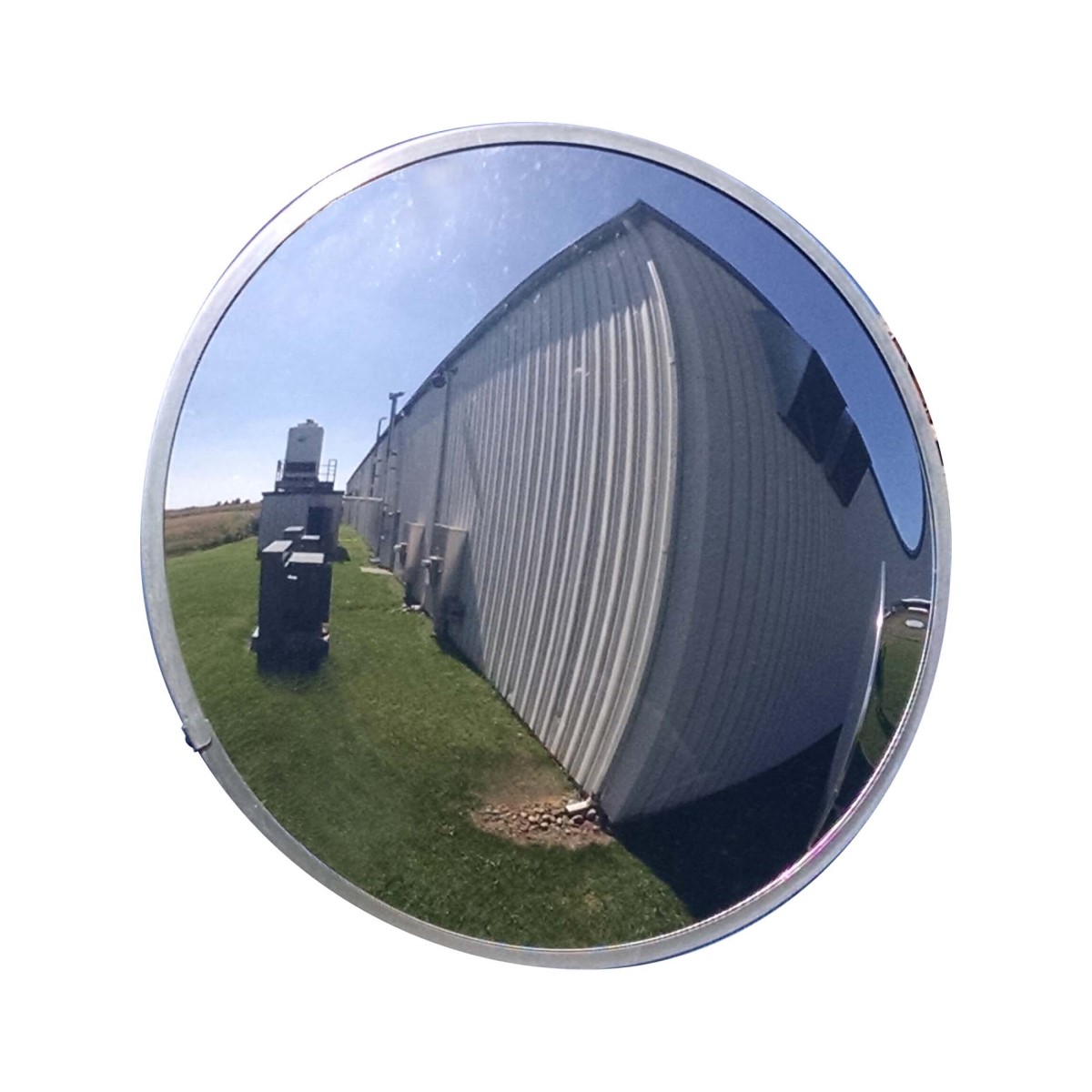
A convex mirror has a surface that curves outwards, like the back of a spoon. This outward curve causes light to diverge, allowing the mirror to reflect a wider field of view than a flat mirror of the same size. Objects viewed in a convex mirror appear smaller and further away, but you can see a much larger area.
These round mirrors are widely used for various purposes:
- Traffic Safety: Placed at blind driveways, intersections, or parking garage exits to help drivers see oncoming traffic or pedestrians.
- Warehouse Safety: Installed at aisle intersections to prevent collisions between forklifts and workers.
- Retail Security: Mounted in stores to deter shoplifting and allow staff to monitor areas that might otherwise be out of sight.
- Industrial Monitoring: Used in manufacturing plants to observe machinery or processes from a distance.
Explore our full selection of round convex mirrors for indoor and outdoor applications.
Dome Mirrors: Full, Half, and Quarter Views
Dome mirrors are a specialized type of convex mirror that provides an even wider field of vision, often spanning 180 degrees, 270 degrees, or a full 360 degrees. Their deep, spherical curve makes them ideal for overhead mounting or placement in corners.
There are three main types of dome mirrors:
- Full Dome (360°): These mirrors offer a complete panoramic view of an area. They are typically mounted centrally on a ceiling and are best for four-way intersections, open warehouse floors, or large retail spaces where visibility from all directions is critical. You can find options like our 360-degree full dome mirrors for comprehensive coverage.
- Half Dome (180°): Designed to be mounted flush against a wall, half dome mirrors provide a wide view along a single wall or at a T-intersection. They are commonly used in corridors, hallways, and at the end of aisles. See our range of 180-degree half dome mirrors.
- Quarter Dome (90°): These mirrors fit snugly into a corner where two walls meet. They offer a 90-degree view, making them effective for blind corners in hallways, small rooms, or tight entryways where space is limited. We offer various 90-degree quarter dome mirrors for these specific needs.
All dome mirror types are available in our dome mirror category.
Why Use a Circle Mirror?
The primary advantage of using a circle mirror, whether convex or dome, is their ability to expand your field of vision significantly. Unlike flat mirrors, which reflect objects at their true size and distance, curved mirrors gather light from a wider angle, helping to:
- Eliminate Blind Spots: Crucial for preventing accidents involving vehicles, forklifts, or pedestrians in busy areas.
- Enhance Security: Allows for monitoring large areas, deterring theft in retail environments, and observing activity from a single vantage point.
- Improve Navigation: Aids drivers in maneuvering through tight parking spaces, crowded lots, or complex warehouse layouts.
- Boost Safety: Provides an early warning system for potential hazards, giving individuals more time to react.
Choosing the Right Mirror Type for Your Needs
Selecting the correct circular mirror depends on your specific application and the viewing area you need to cover:
- Viewing Area: For a general wide view in one direction, a standard convex mirror is usually sufficient. For multi-directional or overhead visibility, a full, half, or quarter dome mirror will be more effective. Consider the dimensions of the area and the furthest point you need to see.
- Environment: Indoor mirrors typically use acrylic lenses, while outdoor mirrors often feature more durable polycarbonate lenses or galvanized steel backing to withstand weather conditions. You can learn more about lens material options to make an informed choice.
- Mounting Location: Convex mirrors are versatile for wall or post mounting. Dome mirrors are designed for ceiling or wall corners, depending on the type.
- Size: Larger mirrors offer a greater field of vision but also require more space. Measure your area carefully to ensure the mirror fits and provides adequate coverage.
Installing Your Circle Safety Mirror
Proper installation is key to ensuring your circle mirror performs effectively. Most convex mirrors come with adjustable mounting brackets that allow for precise positioning on walls or posts. Dome mirrors are generally mounted flush to a ceiling or wall corner using appropriate hardware.
Always follow the manufacturer's specific instructions for mounting and placement to ensure stability and optimal viewing angles. For detailed guidance, refer to our pages on how to install your convex mirror or dome mirror mounting options.